It‘s a familiar image—the goldfish swimming in circles within a small glass bowl perched on a nightstand or dresser. Once a common sight, and hopefully no longer so in the real world, this somber scene serves as a clear reminder of what fish truly require. Their needs extend beyond just water. As caregivers, it’s our duty to ensure their well-being and health, as they are entirely reliant on us. But what exactly do fish need to thrive?
The fascinating inner life of fish
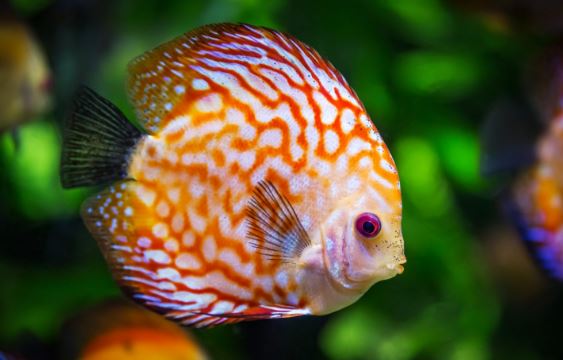
Fish are among the most popular pets. However, they are often underestimated and their needs and cognitive performance are misunderstood. However, exciting research results clearly show that fish, the oldest vertebrates on our planet, have a multifaceted inner life and a strong ability to perceive and feel: they are consciously aware of their surroundings, communicate in various ways, feel pain, suffer from stress and can even learn from experience. Of course, the question of fish needs cannot be resolved easily and certainly not in general, because it depends on their species. However, there are some basic needs that all fish have, without exception. And that’s what we’ll talk about next.
Design an animal-friendly habitat
Plenty of space to swim and explore
Fish need space to move, keep busy and explore their surroundings. It is therefore important to ensure that the size of the aquarium depends on the needs of the corresponding fish species. Seek advice on this and, if in doubt, choose a larger size. More water not only promotes the well-being of your animals, but also automatically leads to a more stable water quality as the biological balance is maintained for longer.
Leer mas Profile of the Jack Russell Terrier | Origin and history
The density, i.e. the number of fish kept, must not be too great to avoid stress among the animals and an «overturning» of the water due to excessive excretions. You can recognize stress, for example, by reduced growth, aggression towards other animals or reduced food intake.
Importance of water and light quality
Over the millions of years of their development, fish have adapted perfectly to the “water” habitat with all its chemical and physical conditions. With their gills and skin they are in constant contact with the environment and tolerate only small variations in water quality. Ensuring their well-being not only requires sufficient space, but the quality of the (aquarium) water is also of fundamental importance. It is therefore important to regularly check the water values in order to promptly counteract any imbalances and avoid damage to health. There are three values in particular that vary depending on the type of fish: the pH value of the water, the hardness of the water (total hardness and carbonate hardness) and the temperature of the water.
Light is also an aspect to take into consideration, because even in this case the different types have different needs. While some tolerate a lot of light, others are very sensitive to it. Above all, it is important to have sufficient shelter and shaded areas where the fish can retreat if necessary. Floating plants or ferns also offer protection from too much light. It is necessary to take into account the day-night rhythm of the fish, and the aquarium must not be visible from all sides.
Suggestion: You can have the water parameters of your aquarium tested at our markets at Kölle Zoo. Simply bring a water sample in a clean container and our staff will check the total and carbonate hardness, as well as the ammonia, nitrite, etc. content. To check the temperature, a waterproof thermometer is recommended.
Leer mas Profile of the Sinai spiny mouse
Varied environment
In addition to sufficient swimming space, hiding places and shaded areas, you should also value an animal-friendly environment. Boredom leads to stress, and stress in turn can promote disease. A versatile and varied design of the living environment of your fish, based on their natural habitat, guarantees vitality and well-being. Rounded gravel is suitable for the bottom of the pool to avoid injuries caused by sharp-edged stones. Do not use stones with holes that are too small for the type of fish, as the risk of the animals becoming trapped is high. Otherwise there are almost no limits to your creativity and imagination. Design your aquarium with roots, aquatic plants, gravel, stones and caves and get advice from a specialist dealer on the needs of your fish.
Do fish need companions?
Each species of fish has different needs in terms of social contact. While some fish are solitary creatures, stressed and sometimes aggressive towards other fish, others need to be kept in pairs, harems, schools or groups. Fish that are best kept in pairs include South American butterfly cichlids. In small groups of about 5 animals, the hornbill catfish feels most comfortable. Red neons require the protection of swarms possibly exceeding 15 animals. When keeping a harem, a male is kept with several females of the same species; this is recommended for many perch species. So not all fish are the same. While some feel more comfortable alone, others desperately need the safety of a group to avoid wasting away.
In addition to correct breeding, the stock, i.e. the number of animals kept in an aquarium, is also important. Overfilled aquariums cause stress in the animals (so-called «density stress») and also damage the quality of the water. For some species, socialization, i.e. the bringing of unknown animals together, is not a problem, for others it is a challenge. Keep in mind that not all fish species can socialize with each other. Furthermore, fish can obviously have individual dislikes or likes even within the same species.
Healthy eating and disease recognition
As with all animals, there is one for fish too A healthy and animal-friendly diet is of considerable importance for staying healthy and vital. Find out more here or get advice on which food is ideal for your fish.
If you suspect that your fish may be sick, you should consult a fish-trained veterinarian and check the water parameters. Diseases manifest themselves, for example, in changes to the gills, spots, frayed fins, reduced food intake, reluctance to move or bulging eyes.
Suggestion: Be careful not to “overfeed” your fish; this can lead to health problems. Excess food ends up on the floor and is then never eaten again. The additional excretions negatively affect water quality and promote algae growth. So always feed your pets according to their needs. Snails and shrimp can help keep your aquarium clean by eating food debris at the bottom.
Leer mas Free flight for birds | Why is free flight important for birds?
Conclusion
Fish have amazing cognitive abilities and exhibit complex behaviors. If they are not raised in an animal-friendly way, they suffer without being able to express it through sounds or facial expressions. This is why it is so important to inform yourself in depth about the needs of the respective fish species to allow them to live a happy life without fear and stress. This way we can help ensure they don’t feel like the sad, famous goldfish in the glass.
latest posts published

Belgian Malinois: characteristics of the dog breed

Norwegian Buhund: characteristics of the dog breed
Caring for the Chinese Water Dragon

The best brushes for cats

How to choose the best chew toys and treats for your dog

How to train your puppy to walk on a leash

Czech Terrier (Cesky Terrier): characteristics of the dog breed

Pembroke Welsh Corgi: characteristics of the dog breed

The best bags for carrying cats