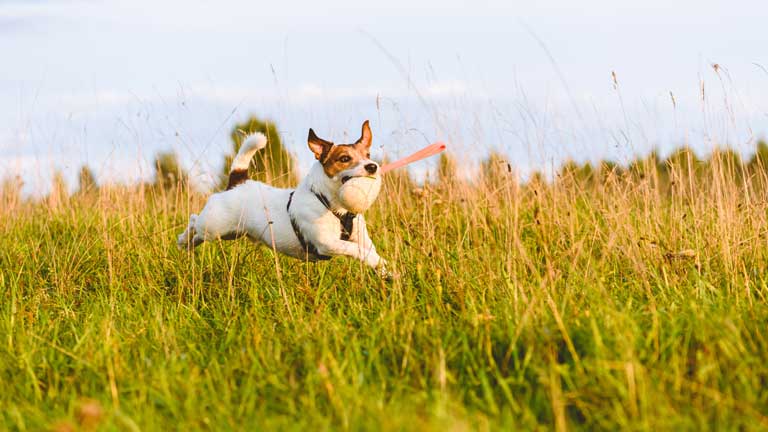
The origins of the Jack Russell Terrier can be traced back to Great Britain. In 1819, a shepherd, avid horseman, fox hunter, and Fox Terrier breeder named John «Jack» Russell established the foundation for this breed, as well as the Parson Russell Terrier, by acquiring a dog named Trump. His primary aim was to develop a nimble and fearless hunting dog that was smaller than the Fox Terrier, enabling it to pursue foxes into their dens. These dogs also needed to possess enough confidence to drive foxes out. With this objective in mind, two distinct breeding lines were developed: the Jack Russell Terrier, characterized by its shorter, rectangular legs, and the Parson Russell Terrier, distinguished by longer, proportionally square legs.
With the naturalization and spread of the red fox in Australia in the mid-19th century, the demand for hunting dogs of this type increased, which were then imported from Great Britain. In Australia the breeding of the Jack Russell Terrier continued intensely because there was a need for a specialized hunting dog. Foxes introduced to Australia inhabited rabbit burrows, which had very small openings and passageways. The Jack Russell Terrier was the perfect size for the task.
When John Jack Russell died on April 28, 1883, Arthur Heinemann took over his kennel dogs and continued to breed them. The Jack Russell Terrier was only recognized as a breed by the International Dog Breeding Association (FCI) in 2000. In addition to the FCI standard, other clubs also have their own breed standards.
I wait
Body type, height and weight
The Jack Russell Terrier is one of the low-legged “rectangular” terriers. The breed is therefore short-legged and longer than tall. This makes it ideal for den hunting.
Leer mas Profile of the Sinai spiny mouse
Additional Information: Jack Russell Terriers usually have a long tail. In Germany, tail docking is prohibited. Dogs used for hunting purposes are an exception.
The standard (according to the FCI) corresponds to a height at the withers of 25 to 30 centimeters and a weight of 5 to 6 kilograms.
Fur and colors
The Jack Russell Terrier has three coat types: short-haired, wire-haired and wire-haired. There may also be transitional forms between individual fur types. As a rule, short-haired dogs have no undercoat. Their fur, consisting only of the upper hair, offers some protection against rain, but does not protect against heat and cold. Wire-haired and wire-haired dogs have both an overcoat and an undercoat. So you have protection from the rain and protection from the heat and cold. If a short-haired Jack Russell Terrier stays outdoors for a long time in cold, wet weather, you should consider purchasing a warm coat.
The basic color of the coat should be white according to the standard. Black and/or tan (reddish-brown) markings are permitted. Tan lines can occur in all shades.
Character and essence
Jack Russell Terriers have the heart of a lion in the body of a dwarf. The breed was bred to hunt and capture animals larger than itself in underground lairs without direct human influence. For this reason the breed has a strong sense of self-confidence and a high degree of independence.
Leer mas Free flight for birds | Why is free flight important for birds?
Attention! This «megalomania» can also be fatal for the Jack Russell Terrier if it faces other much larger, stronger and even assertive animals.
He is a keen hunter and is not picky in choosing his potential prey. His enthusiasm for rat and mouse hunting, for example, made him a popular stable and riding dog. But the neighbor’s cat, pets, wild animals and grazing animals can also become the object of his hunting desires. The «Jackie» usually shows amazing persistence and almost limitless endurance. What does not adapt is made to adapt, the Jack Russell also widens the entrances to the mburrows of its potential prey by digging very quickly and skillfully and disappears there in a very short time to chase them. Due to its strong hunting behavior, the Jack Russell Terrier cannot always be kept without problems together with other pets.
These characteristics of an independent “thoroughbred hunting dog” also make its training not easy. Although the breed is affectionate and people-oriented, it needs an owner who is even more assertive than the Jack Russell Terrier himself and who remains confident and even-tempered when trained. Therefore the Jack Russell Terrier is not suitable as a beginner dog. In expert hands, however, they are a lot of fun: you never get bored!
Although the breed is usually fond of children, it also tends to try to train them, especially with younger ones.
Leer mas Cooling off in the heat for cats
Jack Russell Terriers are very «talkative» and noisy. This is also due to their existence as hunting dogs. They had to indicate aloud to the hunter which fox’s den they were in. However, “Jackie” shows this communicative nature even in civilian life. This property should absolutely be considered before purchasing.
Is a Jack Russell Terrier right for me? How should it be held?
Jack Russell Terriers need a lot of exercise and, above all, activity. However, monotonous exercise, such as only on a leash in the city, does not correspond to Jackie’s ideas. The breed tends to seek work when underchallenged. It may happen that the dog uses every opportunity to independently enjoy the great freedom in the woods and fields and to hunt for prey. When necessary, the Jack Russell Terrier also satisfies his strong need to dig in flower beds or flower beds.
A Jack Russell Terrier is suitable for active people who spend a lot of time outdoors and have the opportunity to spend a lot of time with their dog. The breed is also enthusiastic about dog sports such as agility and flyball. Dummy training or fetch is also a good way to keep this intelligent dog breed occupied.
 Profile of bearded collie | The Bearded Collie is a British dog
Danger: Jack Russell Terriers can sometimes perform a task in a very «fanatical» manner. In addition to hunting, this especially applies to ball games and digging. When exercising, especially in summer, make sure your dog doesn’t overexert himself.
Nutrition
There are no general recommendations regarding nutrition. In addition to traditional dry or wet food, BARF and other raw feeding models are also suitable for the Jack Russell Terrier. High quality is always important. We found out how to recognize a good dog food in our article “Which dog food is best?” summary for you.
Treatment
Grooming is the easiest for short-haired and wire-haired Jack Russell Terriers. Soft fur brushes and a massage comb are best suited. In addition, you can use an undercoat brush for representatives of the wire-haired breed, especially during the moulting period. Wire-haired dogs need regular trimming to remove dead hair. A finishing knife is suitable for this purpose or you can simply finish by hand.
Important: Trimming involves eliminating dead hair. Cutting it with scissors, for example, would only shorten the fur, but would not remove the dead hair!
For the rest, the same thing applies to the Jack Russell Terrier as to other dogs: brushing their teeth regularly can help keep their teeth healthy for as long as possible. The claws should also be checked regularly and shortened if necessary. We have summarized for you what else you need to consider when it comes to dog care in our article “Dog care from head to toe”.
Typical diseases
Some breed-specific diseases may occur in Jack Russell Terriers, e.g. For example.:
Ataxia and myelopathy: Myelopathy is a degenerative and incurable disease which, in addition to the Jack Russell Terrier, can also affect the Parson Russell Terrier and the Fox Terrier, for example. This disease, which usually manifests itself in the first months of life, is characterized by disruption of the white matter of the spinal cord, especially in the neck and chest area. Affected dogs manifest themselves due to movement disorders, especially in the back (ataxia), such as leg paddling, cramped and unsteady gait, standing with legs apart, and muscle tremors. If spinal cord damage is advanced, dogs often fall and are unable to get up without help. Some dogs also experience hearing loss as the disease progresses.
Important: Not all muscle tremors are necessarily indicative of this disease. Many terriers, for example, tremble with excitement when they see something they want to hunt. If you are unsure about this, seek advice from a vet.
Linen dislocation: A lens dislocation (lens displacement) is a disease that leads to blindness in which the attachment mechanism of the lens is weak, meaning it does not stay in its intended position. If the lens slips, if left untreated, glaucoma occurs, leading to blindness. Weakening of the lens support system usually occurs in both eyes and usually becomes visible in both eyes within a short amount of time. With timely diagnosis and surgery, blindness can often be prevented.
Glaucoma (glaucoma): Glaucoma is related to increased intraocular pressure. The increased pressure causes damage to the retina and optic nerves, which ultimately leads to vision loss. The disease usually manifests itself through clouding of the cornea and redness of the eyes. In this case, you should immediately consult a veterinarian who can perform emergency surgery on the affected eye.
Tartar: Like most small dog breeds, Jack Russell Terriers are prone to tartar. This is because the teeth of a smaller dog are closer together than of a larger one and the tartar can therefore settle better. TO regular dental care However, the tartar usually doesn’t stand a chance.
Frequently asked questions about the Jack Russell Terrier
When can you have a Jack Russell Terrier neutered?
You can have your Jack Russell Terrier neutered once he reaches sexual maturity.
When does the breed become fully adult?
Jack Russell Terriers are usually fully grown by the end of their first year of life.
When do Jack Russell Terriers become sexually mature?
Sexual maturity occurs around eight to twelve months.
When does the Jack Russell Terrier become calmer?
The breed is very agile and can only become a little calmer at the age of ten to twelve years.
How can I control my Jack Russell Terrier’s hunting instinct?
The secret to success here is good education, training and proper activity with the dog. A dog lead and safety harness prevent your dog from accidentally running away until he can be retrieved.
Jack Russell Terrier as a family dog – is it possible?
A Jack Russell Terrier is suitable for active, dog-savvy families with older children. What is important is that all family members treat the dog calmly but consistently.
latest posts published

Belgian Malinois: characteristics of the dog breed

Norwegian Buhund: characteristics of the dog breed
Caring for the Chinese Water Dragon

The best brushes for cats
How to choose the best chew toys and treats for your dog
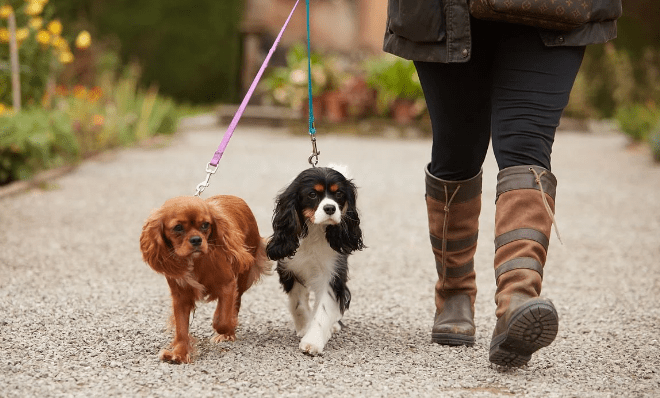
How to train your puppy to walk on a leash

Czech Terrier (Cesky Terrier): characteristics of the dog breed

Pembroke Welsh Corgi: characteristics of the dog breed

The best bags for carrying cats