

The Sinai spiny mouse (Acomys dimidiatus) ranks among the most commonly kept spiny mouse species by humans, alongside the golden spiny mouse (A. russatus), the Nile spiny mouse (A. cahirinus cahirinus), and the pygmy spiny mouse (A. spinosissimus). All species of spiny mice are defined by the hard, bristly hairs on their back fur, which give them their distinct name. The Sinai spiny mouse has a broad distribution, spanning areas from the Sinai Peninsula through Lebanon, Syria, Jordan, Israel, and the Arabian Peninsula, extending into southern regions of Iran, Iraq, and Pakistan.
Behave
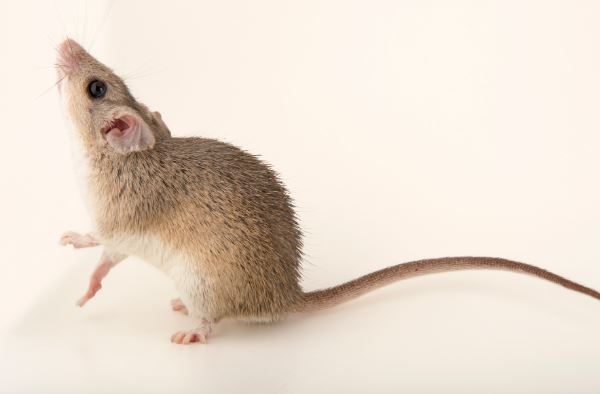
Sinai spiny mice are social animals. You can keep groups of all females as well as one male with multiple females. Sexually mature males generally do not get along and engage in bitter fights. It is best to accustom spiny mice to each other before they reach sexual maturity, as it can be very difficult to socialize adult animals with each other. An unmistakable sign of stress and intolerance in the group are lesions on the ears and tail! In Sinai spiny mice, phases of 24-hour activity can be observed, repeatedly followed by phases of rest.
Additional Information: Female spiny mice help each other give birth; Animals are said to have an “obstetric instinct.” Young animals are precocious and are raised together by females.
Leer mas Free flight for birds | Why is free flight important for birds?
Animal-friendly breeding
A spiny mouse enclosure for two animals should have an area of at least 0.5 m2 Have. Terrariums or nagari for small mammals are ideal to keep. Since spiny mice like to climb and climb well, the height of the house should be at least 75 cm, with an area of for example 100 x 50 cm. It is important to have a three-dimensional structure so that spiny mice can satisfy their urge to move and climb. You can build several levels in the enclosure and offer your mice thorny branches and pipes to climb. It is best to place the rodent house in a quiet place, without direct sunlight and drafts. The comfortable temperature for Sinai spiny mice is 22-26 °C. Ideally, animals can visit the warmest and coolest areas of their home. The litter layer should be at least 10 cm high. Suitable is e.g. B.
Bedding for small animals mixed with hay and straw. When cleaning the cage it is best to change only part of the bedding mixture, as spiny mice rely heavily on their sense of smell. It is very important to place all heavy furnishings (litter box, sandpit, food and water bowls, running dishes) so that they cannot be buried to prevent spiny mice from becoming trapped underneath. Place all heavy objects, e.g. B. on a stone base that reaches up to the floor of the rodent house or on intermediate levels. It is also important to have plenty of hiding places so the animals can retreat. Spiny mice are generally happy to accept a walking dish. It is more suitable than a running wheel for spiny mice, since with a running plate the risk of injury to the sensitive skin of the tail is lower. To care for their fur, your Sinai spiny rats need a sand bath filled with chinchilla sand.
Animal-friendly diet
Sinai spiny mice are mixed food eaters. Especially low-fat seeds should be offered, as animals tend to become obese. Animal proteins are also present in the menu of Sinai spiny mice. You can prepare your own food mixture with small seeds and supplement it with animal proteins (for example dried mealworms or dry cat food), or you can also use ready-made food for dwarf hamsters. Vegetables and herbs are suitable as fresh foods. You should avoid sugary fruits and vegetables (corn, sweet carrots), as they can make your spiny mice fat and can also lead to the development of diabetes.
Who are Sinai spiny mice suitable for?
Sinai spiny mice are only suitable as observation animals, because although they can become friendly, they do not like to be taken outside and do not like to be petted. During handling it should also be borne in mind that the tail of the animals has a predetermined breaking point. If tension is applied, the tail tears easily. Therefore, under no circumstances should animals be grabbed by the tail. If you need to catch spiny mice outside the enclosure, it is best to use a Becker or a small carrying box.
You should allow 10 – 20 minutes for daily care of your spiny mice (feeding, cleaning toilet corners, removing any fresh food residue). Additionally, you should allow an hour once a week for a more thorough cleaning of the cage. Sinai spiny mice live two to four years. During this period, the unusual foster puppies delight their owners with their interesting social behavior.
 Cooling off in the heat for cats
conlusion
The Sinai spiny mouse (Acomys dimidiatus) represents a remarkable example of adaptability and diversity within the group of spiny mice. As one of the most commonly kept species alongside others such as the golden, Nile, and pygmy spiny mice, it highlights both the ecological importance and the growing human interest in these unique rodents. Their defining feature—the stiff, bristly hairs on their backs—not only gives them their name but also reflects their adaptation to challenging environments, offering protection and durability in harsh conditions.
One of the most striking aspects of the Sinai spiny mouse is its extensive geographical distribution. Spanning regions from the Sinai Peninsula across the Middle East and into parts of Asia, this species has demonstrated an exceptional ability to thrive in a wide range of habitats. From arid deserts to rocky terrains, its survival across such diverse environments speaks to its resilience and evolutionary success. This adaptability is a key reason why the species continues to maintain stable populations across its range.
In addition to its ecological significance, the Sinai spiny mouse also plays a role in human contexts, particularly as a species kept by enthusiasts and researchers. Its manageable size, distinctive appearance, and interesting behaviors make it appealing for observation and study. As part of a broader group of spiny mice, it contributes to scientific understanding of adaptation, survival mechanisms, and species diversity in extreme environments.
However, the wide distribution and interaction with human environments also highlight the importance of responsible awareness and conservation. Even though the Sinai spiny mouse is relatively widespread, changes in habitat, environmental pressures, and human activity can still impact local populations. Recognizing its role within ecosystems is essential to ensuring that these animals continue to thrive in their natural habitats.
Leer mas Profile of bearded collie | The Bearded Collie is a British dog
In conclusion, the Sinai spiny mouse is more than just a commonly kept rodent—it is a resilient and adaptable species that reflects the complexity of life in challenging environments. Its unique physical traits, wide distribution, and ecological importance make it a subject of both scientific interest and admiration. By understanding and appreciating species like this, we gain deeper insight into biodiversity and the delicate balance that sustains it.
latest posts published

Belgian Malinois: characteristics of the dog breed

Norwegian Buhund: characteristics of the dog breed

Caring for the Chinese Water Dragon

The best brushes for cats

How to choose the best chew toys and treats for your dog

How to train your puppy to walk on a leash

Czech Terrier (Cesky Terrier): characteristics of the dog breed

Pembroke Welsh Corgi: characteristics of the dog breed

The best bags for carrying cats
