
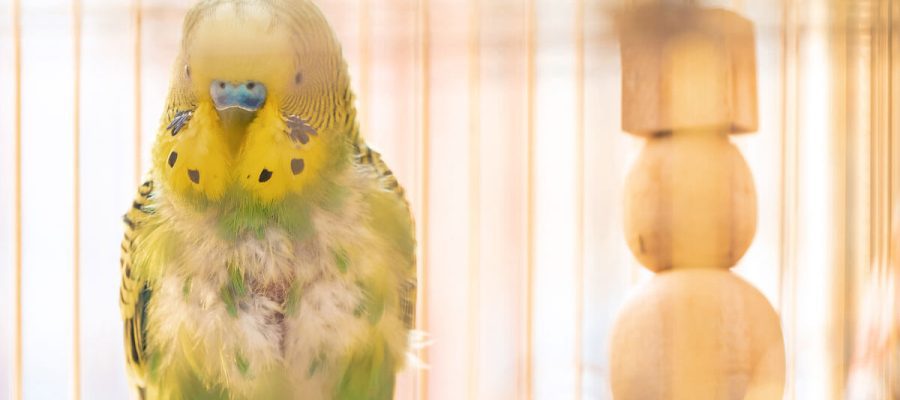
Birds can also contract infections caused by pathogens like bacteria, fungi, viruses, and parasites. Regrettably, illnesses in birds are often detected too late, as they instinctively conceal signs of weakness or symptoms. In the wild, this behavior serves as a survival mechanism to avoid becoming an easy target for predators. This makes performing daily health checks crucial. Certain characteristics can help differentiate between a healthy bird and one that is unwell.
Body, movement and posture
The healthy bird sits upright on the perch. The weight rests on both legs, the halves of the body appear symmetrical, the wings rest evenly on the body. The movements when flying, climbing and running seem harmonious.
A sick bird sits swollen on the perch, sometimes only one leg is put under weight, and the head is tucked into the feathers. The animal sleeps a lot and is reluctant to move. The movement of the tail when sitting on the perch or the opening of a wing are also signs of illness.
Excretions

 Antenna catfish profile
The excretions of a healthy bird consist of a white portion of urine and a portion of gray-brown feces, easily distinguishable from each other. If the two parts cannot be distinguished from each other but form a soft mass, this is to be considered a sign of illness (exception: birds that feed only on soft foods, e.g. lorises).
Plumage, skin and head
In a healthy bird, the plumage lies evenly and cleanly on the body, no bald spots are visible; this can only occur in a healthy bird during moult. The feathers around the cloaca are also clean, there are no visible signs of dirt or sticking. The skin of the feet and nose appears smooth, the beak is clean and short. The eyes are wide open, clear and shiny.
The feathers of a sick bird are almost always ruffled and appear dull. If there is loose stool or diarrhea, the feathers around the cloaca stick together and bald spots may also appear in the feathers. The skin on your feet or nose may also be changed and appear scaly/dry. The eyes are often closed or only partially open, the beak may be dirty or sticky.
Behave
If the bird is well, it likes to move, takes part in its surroundings with interest and readiness, flies a lot, climbs, runs and communicates with its peers. The bird cleans its feathers regularly and eats several times a day.
Leer mas Planarien in the Aquarium
When the bird is sick, it shows little or no interest in its surroundings and other birds. You can usually find him sleeping in the same place with his eyes closed or with his head buried in his feathers. He moves with difficulty or only with difficulty and has little or no interest in food. With some diseases, birds eat a lot of food but still lose a lot of weight. But even here the animals do not seem to be in good shape and appear apathetic.
Basic information on sick birds
Not all of the symptoms described have to occur at the same time; the symptoms that the affected bird shows also depend on the type and severity of the disease.
Important: If you notice signs of illness, consult an avian veterinarian as soon as possible. The earlier treatment is started, the better the pet’s chances of recovery.
How can you prevent?
Many points play an important role in disease prevention, such as respectful animal husbandry, a varied diet, employment, but also hygiene in the bird shelter.
Leer mas Does your dog shed a lot of hair?
Animal-friendly breeding
In principle, no bird should be kept alone as it is a flock animal. This means: at least in pairs, better in a pack. Animals kept alone often exhibit behavioral problems such as feather plucking, which is far from beneficial for their health.
Animals should also be able to move freely within a safe flight space for several hours a day, which is essential for muscular and general fitness. It makes sense to have several approach options. An aviary should be viewed only as a place to retreat or sleep. You can find more information about animal-friendly bird breeding here.
Animal-friendly diet
Fresh food should be part of the daily menu; various fruits and vegetables, as well as herbs, can be offered. When it comes to drinking water, it’s important to make sure it’s changed at least once a day. We recommend adding a powdered water-soluble vitamin and mineral supplement several times a week as needed.
Adapted lighting
Furthermore, the animals must have a UVA/UVB lamp (with power supply) available to sunbathe during the day; this stimulates the body’s production of vitamin D and significantly increases the well-being of the birds. This way colors can also be perceived better. Many birds also eat more/better of their fresh food because it seems more attractive to the animal due to improved color perception.
Leer mas Why drinking fountains are useful for cats
Animal-friendly work
A variety of toys made from different materials that are changed regularly help ensure that the birds never get bored. Here they can play, gnaw or climb and thus express natural and important behaviors.
Hygiene
The hygiene of the bird enclosure is also an important point. Regular cleaning of the cage, perches, bowls and other furnishings with animal-safe detergents and disinfectants is essential and reduces germ pressure.
Conclusion
As responsible bird owners, we have a duty to monitor our animals carefully and consult a veterinarian if they show signs of illness. Dull fur, closed eyes, bloating, diarrhea, or apathy are signs that something is wrong with the bird. Due to the rapid metabolism of birds, harmless symptoms can quickly turn into an emergency, so the rule is: go to the vet at the first sign so that the bird can be helped quickly.
latest posts published

Belgian Malinois: characteristics of the dog breed

Norwegian Buhund: characteristics of the dog breed

Caring for the Chinese Water Dragon

The best brushes for cats

How to choose the best chew toys and treats for your dog

How to train your puppy to walk on a leash

Czech Terrier (Cesky Terrier): characteristics of the dog breed

Pembroke Welsh Corgi: characteristics of the dog breed

The best bags for carrying cats
