This way you protect your birds from danger when they are flying freely
Especially during the first flight attempts, there is a risk that your birds will hit windows or mirrors with full force and injure themselves. It is best to completely remove mirrors from bird rooms or cover them with a blanket during free flight. You can bird-proof your windows by lowering the shutters or installing thick curtains in front of them. Colored post-it stickers or other stickers are also suitable as an emergency solution. This is how your animals recognize that there is no way out. However, if you lower the shutters, you need to make sure that there is still enough light for your pets to orient themselves sufficiently. So keep the lights on!
Spaces between furniture and walls
Particularly dangerous are narrow spaces between wardrobes, cupboards, shelves, etc. and the wall. Birds can enter here and never be able to get out without help. Unfortunately, it is not uncommon for them to suffer cardiac arrest or injure themselves due to panic. So, before free flight, move all furniture directly against the wall or close existing spaces with boards or something similar.
Strom
Both electrical outlets and cords pose a serious danger to birds. They love to gnaw and are exposed to the risk of sometimes fatal electric shocks. To avoid injuries, a child safety lock on the sockets is sufficient. Electrical cables should be removed or hidden in special ducts so that birds cannot access them.
Poisonings
Poisonous houseplants should especially be mentioned here. Plants are naturally very attractive to birds and birds will sooner or later be unable to resist nibbling on them. All plants in the bird room should be harmless to the health of birds. Poisonous plants must be removed from the room. Other poisoning hazards include medications, food, cigarettes (butts), cleaning products, and lead tape in tents. All this will need to be removed from the room before free flight.
Leer mas BARF or dry food: which is better?
Some houseplants are very poisonous to birds. The bird room should therefore only contain plants that can be gnawed safely to avoid poisoning.
Deep vessels
Very deep containers such as vases pose a great danger to birds if they fall into them and cannot get out on their own. When panicked, birds quickly suffer fatal cardiac arrest. It is especially dangerous if there is water in these containers. Then remove all deep pots from the bird room.
Other pets
“It won’t hurt the birds.” Many dog and cat owners said this phrase with full conviction and good intentions before it actually happened. A single smack or swipe of the paw is enough. This does not have to be done on purpose. For example, your dog might jump in fear when the bird lands next to him and startles him awake. Therefore the general rule applies: other pets should not have access to the aviary.
Kitchen
For various reasons the kitchen is not a suitable environment for birds. Hot stoves, fumes from Teflon pans toxic to birds, food scraps, dishwashers, extractor hoods and much more are serious sources of danger for our feathered friends. Cooking should therefore generally be taboo for birds.
Leer mas Profile Nonna Loreto | The Fairy King Short (Loreto Range) is a striking and vibran
Open windows and doors
Of course doors and windows should be closed so your birds don’t escape. No bird will be able to resist the temptation to escape to freedom through an open window. Slanted windows with screens can be dangerous: birds could squeeze between the screen and the glass and seriously injure themselves trying to get out. Even a door ajar can be dangerous: just a draft and the door slams shut. You can imagine what happens to the bird sitting on the edge or in the middle.
People
Even we humans can become a danger to birds if we do not move carefully in the bird room. We could sit on them or step on them. All family members and visitors should therefore be informed that birds fly freely and should behave accordingly. This is especially true for children.
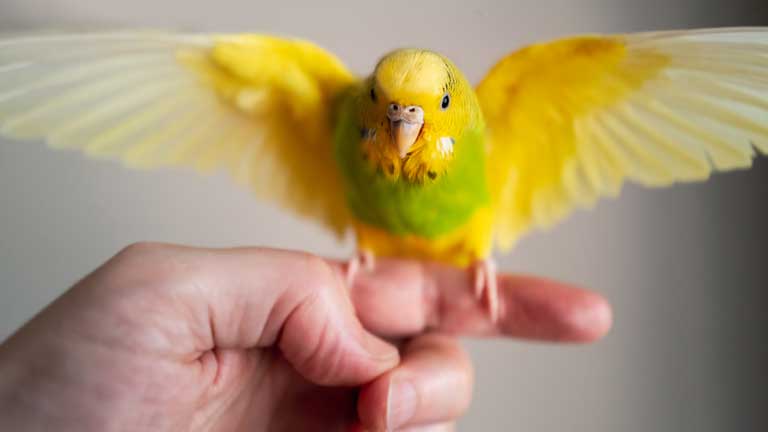
On purpose: The bird room is the ideal place to connect with our feathered friends. Here they feel less pressured than in the aviary and can decide for themselves the pace at which they approach us.
Chandeliers and ceiling lights
Birds may consider chandeliers and ceiling lights as a suitable landing spot. There are two dangers lurking: if the lamps are lit, they can be very hot and hurt the bird. Unsecured cables also pose a serious risk of injury if birds nibble on them. A fatal electric shock may occur.
Leer mas Cooling for birds in hot weather | How do I know if my birds are too hot?
Curtains
The bird can become entangled and seriously injured in tulle or fine fabric curtains. Thick curtains without fine mesh are more suitable.
More tips and tricks
If you implement the measures mentioned above you will create the foundation for free and safe flight for your pets. Below we have collected some tips for flying for free for you:
Offer landing sites
Make sure your birds have adequate landing options in the room. Bird trees that you can buy or build yourself are particularly popular with birds. Birds like to use these trees to stop or relax. There should also be several landing options in the rest of the room, such as cotton ropes attached to hooks or swings. To return to the cage comfortably and safely, your birds will benefit from a suitable landing spot near the door, such as a narrow board or perch. From there they can easily return to their cage.
Reduce pollution
To reduce cleaning effort, it is a good idea to lay newspapers under your birds’ favorite places, such as under swings or perches. Most of the droppings will fall on it and you can simply dispose of the newspaper after free flight. A steam cleaner has proven to be effective for heavier dirt.
Leer mas Profile of the Amano shrimp
Find a rhythm
It is wise to establish a “free flight rhythm” over time, unless your birds are flying freely in their aviary all day anyway. In this case, they can decide for themselves when to leave the cage and go for a walk, or whether to stay «outside» all day and go to their shelter only to sleep and eat. If your birds only fly free for a few hours a day, it is a good idea to time them and always open and close the cage door at the same time. For example, if you always open the cage door at the same time in the morning and close it again at the same time in the evening, your animals will get used to it very quickly and will return to the cage on their own in the evening. Most birds are most active in the morning and late afternoon, so it makes sense to offer them free flight at these times. At lunchtime, many birds like to take a long siesta.
Employment and opportunities to gnaw on
Even when flying freely, your birds enjoy interesting business opportunities. Hang a mile from the ceiling or wall, put a food plant on the shelf, integrate stimulating furnishings such as cotton ropes, swings, ladders, etc. into the room. This means that your smart housemates always have something new to discover and stay fit and agile. For species that like to gnaw, especially parrots, there should be sufficient opportunities for gnawing, for example natural branches with leaves and flowers or roots. This way they can satisfy their need to gnaw and will hopefully (soon) consider walls and furniture unsuitable now that they have better options available to them.
Conclusion
latest posts published

Belgian Malinois: characteristics of the dog breed

Norwegian Buhund: characteristics of the dog breed
Caring for the Chinese Water Dragon

The best brushes for cats
How to choose the best chew toys and treats for your dog
How to train your puppy to walk on a leash

Czech Terrier (Cesky Terrier): characteristics of the dog breed

Pembroke Welsh Corgi: characteristics of the dog breed

The best bags for carrying cats