
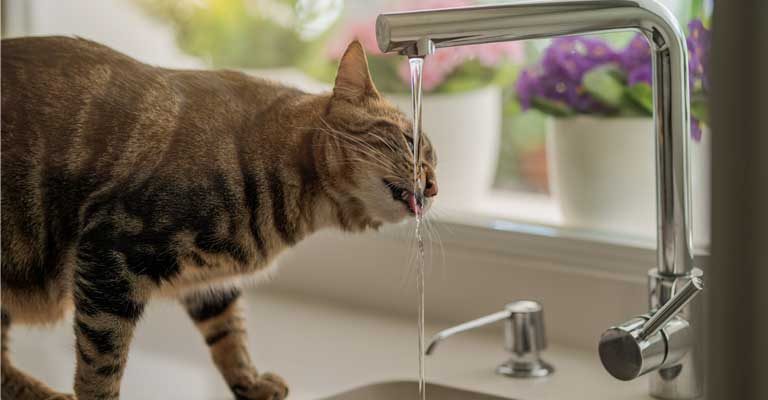
This scene might seem familiar to you: you are in the kitchen and you are turning on the tap when your cat comes running happily, playing a bit and drinking with pleasure. Wait a minute, you think to yourself, isn’t that the same velvet paw that apparently doesn’t touch the water bowl on principle? Who stubbornly refuses to drink enough, even though you’re meticulous about making sure the water is always fresh? In fact, cats seem to prefer running water to stagnant water sources, which explains the great appeal of open taps. There are several reasons, some of which are deeply rooted in the genes of our four-legged divas.
In general, it is a very common phenomenon among cats who leave the water bowl to the left and therefore drink too little. However, this can have significant consequences for their health, particularly that of the urinary tract and kidneys. Compared to normal bowls, fountains offer the advantage that the cat always has fresh, clean and running water available, just the way he likes it. Furthermore, moving water stimulates curiosity and the desire to play. Both can help you make drinking fun again and thus meet your fluid needs. Before going into more detail on the benefits of drinking fountains, let’s see why it is important for cats to drink enough and what the average cat’s daily needs are.
Water as an elixir of life
How much should a cat drink?
Is your cat not drinking enough? Cat fountain
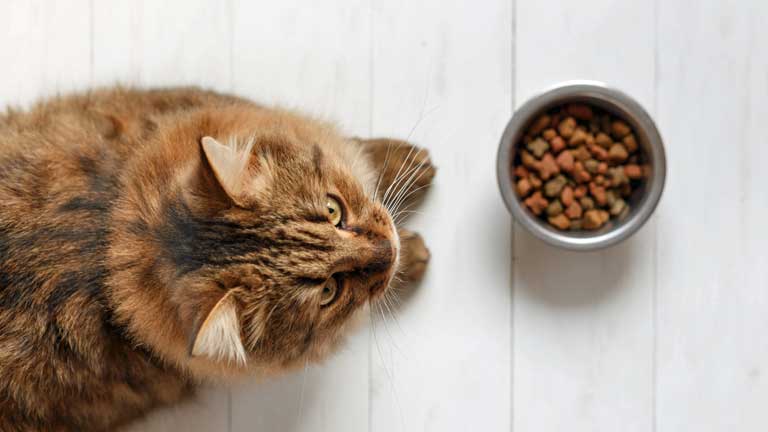
As important as adequate fluid intake is, cats apparently have little desire to drink. At least not from his bowl. Not even if it is filled three times a day. Not even if it’s made of high-quality ceramic. And unfortunately not even if your loved one encourages their furry friend. Cat drinking fountains can be a practical solution for encouraging cats to drink.
Its principle is easily explained: the fountain pumps the liquid in a circuit upwards from a tub filled with water, where it flows back into the tub via a smooth surface, a sphere, a small tap or something similar. On its way, the water passes through various filter media that can remove impurities, soften the water, filter out excess calcium and magnesium or even render bacteria and viruses harmless.
Leer mas Food supplements for dogs: useful or not?
Drinking fountains are available in different materials (plastic, ceramic, stainless steel) and in different designs. Some models have additional special features such as individual adjustment of the water jet, a night light, a water level indicator and much more. What they all have in common is that they always make fresh, clean, running water available to the little four-legged friend.
Good reasons for a cat fountain
If you want to understand why a drinking fountain can be useful for cats or what advantages it can have over a bowl, you need to observe the natural drinking behavior of the wild ancestors of our domestic cats or their relatives living in the wild. As hunters and carnivores, they feed mainly on smaller prey, which is about two-thirds water, which means that much of their fluid needs are already covered. If you want to drink, find the cleanest water source possible. Their excellent hearing helps them and they can precisely locate flowing water. They prefer it because – as their instinct says – it has a lower risk of being contaminated by bacteria, viruses or other germs.
In summary we could say: cats by nature drink little and prefer clean, flowing sources of water. And this is precisely where the drinking fountain comes into play: thanks to its characteristics – running, clean and noisy water – it stimulates the cat’s instincts and can thus motivate it to drink more.
Another argument in favor of drinking fountains is that their «design» allows the cat to drink without hitting the edge with its sensitive whiskers, as often happens with bowls. The cat’s whiskers are extremely sensitive and can detect even the most subtle movements of the air. As humans, we probably only have a very limited understanding of how unpleasant it must be to hit something solid like a bowl. This phenomenon is called “moustache stress”. So it is quite possible that your little mini tiger avoids bowls because he has already had bad experiences with them that he now wants to avoid. A drinking fountain can also help. Depending on the model, your cat has the option of drinking from a large bowl or directly from the water jet, thus protecting its sensitive whiskers.
Leer mas Poodle profile
The playful effect also helps with fluid intake: While your cat holds its paws in the water jet, collects drops or otherwise deals with the fresh water, important fluids usually always end up back in the cat’s stomach.
Drinking fountains can lead to a significant increase in the drinking volume of many cats and are therefore particularly suitable for cats who are not very fond of the water bowl.
Change the water and filter it regularly
To ensure that your little cat diva always has a fresh, bubbling spring at her disposal, you should make sure to change the water in the fountain regularly, at the latest after a few days or when deposits form. However, depending on the number of cats using the fountain and the ambient temperature, the cleaning interval may be shortened. Basically, it’s best to change it more often to keep the water as fresh and clean as possible.
Filters in the well should also be replaced at regular intervals according to the manufacturer’s instructions to maintain their functionality.
Leer mas Panda cory catfish profile
Slow habituation
As with all new things, you should give your cat time to get used to the drinking fountain. Leave it off for now and fill the basin with water. Once your darling has carefully inspected the new utensil and, ideally, has already drunk from it, you can turn on the fountain, preferably on the lowest setting first. If your cat has accepted the fountain well, you can try together which setting he prefers.
Conclusion
Drinking is not one of our cats’ favorite pastimes, but it is essential for their health. In particular, furry friends who are fed primarily or exclusively dry food should drink enough fluids to prevent the development of bladder and kidney problems. However, many cats ignore the simple bowl of water and are only encouraged to drink something if you act like someone who turns the tap. For those who, to the disappointment of their furry friends, do not have time to perform this function thirty-five times a day, a cat fountain can be a good and sensible choice. This provides your cat with fresh, clean, running water 24 hours a day and can therefore help to increase motivation to drink and thus cover its fluid needs.
latest posts published

Belgian Malinois: characteristics of the dog breed

Norwegian Buhund: characteristics of the dog breed

Caring for the Chinese Water Dragon

The best brushes for cats

How to choose the best chew toys and treats for your dog

How to train your puppy to walk on a leash

Czech Terrier (Cesky Terrier): characteristics of the dog breed

Pembroke Welsh Corgi: characteristics of the dog breed

The best bags for carrying cats
