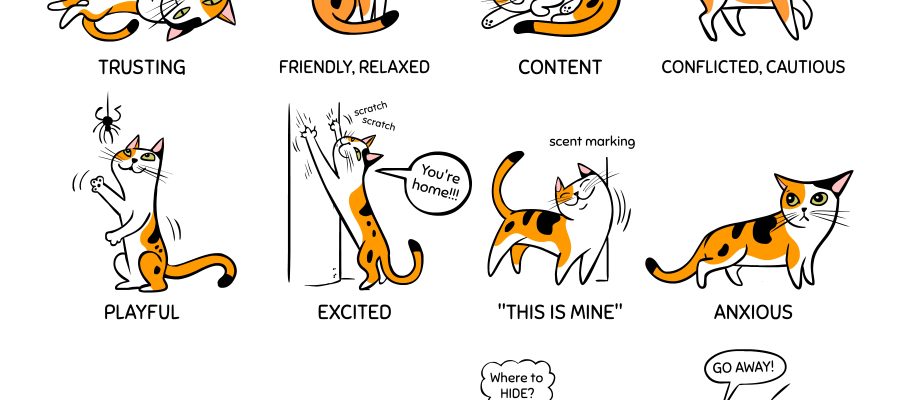
We all know the thought: “What is my cat trying to tell me?We want to assist you in understanding our four-legged friends. Have you heard of cat language? We will explain what it is. How simple it would be if our pets could just communicate with us.
What is cat language?Cats communicate differently than us. Basically you can choose between more verbal AND non-verbal differentiate language. Cats use body language (nonverbal) much more than sounds (verbal). Furthermore, each cat has its own communication style. Want to know more about your cat’s body language? Then you are in the right place!
How can you talk to your cat?It’s not that difficult to communicate with your cat. Even though he will have difficulty understanding specific commands, he will learn to recognize your tone of voice. Use a higher tone to indicate friendliness and a lower tone to indicate anger or dissatisfaction.
If you repeat certain words often in front of your cat, he will learn to understand them. Here’s a little example: If you often say «bed» before going to sleep, your cat will recognize this and follow you into the bedroom.
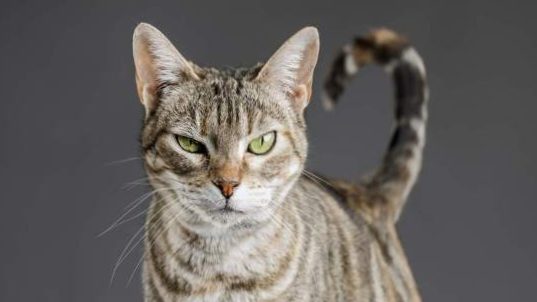 We can also use non-verbal communication or body language to communicate with our cat. Do you want to smile at your cat? Then don’t do it with your mouth, use your eyes. By slowly closing your eyes, you show your cat that you love him.
So far, so good. Now you know how to make it easier for your cat to understand you.
But how can you understand what your cat is trying to tell you?
To make it easier for you, we have put together a short list of emotions that you can easily recognize in a cat.
1. Signs your cat is relaxed
Feel free to wink at your cat to make him feel good. But did you know that you’re actually just imitating cat speech? Cats actually blink regularly. This way they signal to other cats that they are relaxed. It means: “I feel good”. If the other cat has the same feeling, he will mirror the behavior.
Purring is probably the most pleasant and familiar sound made by a cat. Show that your cat is happy and relaxed. But be careful, there are various reasons why cats purr. Cats also purr when… B. they are sick or in pain. The purring then has a calming effect.
You can also read cats’ language from their ears. Does your cat have his ears up and is he lying in a comfortable place? These are also signs that your cat is very relaxed and feels comfortable.
You can also tell how your cat is doing by looking at his whiskers. If she is calm and relaxed, these will also be relaxed and slightly inclined.
2. Signs your cat is playful
You can tell if your cat is playful by looking at his body language or, more specifically, his tail. A playful cat wags its tail back and forth.
Your cat’s ears are erect, pointing slightly forward and pricked.
If your cat has retracted its claws while playing, everything is fine! If you can see the claws, be careful and let your cat rest for a moment.
3. Signs your cat is anxious, tense or stressed
If your cat tucks its tail between its paws, it means it is scared. It shows that your cat is insecure and submissive.
Another sign that your cat is feeling anxious, tense or stressed is if he droops his ears. If the ears are flat, your cat is scared and ready to attack.
Your cat’s eyes also tell you more in this situation. Your cat will therefore be very attentive and alert. In this case, the eyes are wide open and the pupils are significantly enlarged.
The whiskers are directed forward. Your cat may also hunch its back.
4. Signs your cat is irritable
If your cat moves his tail from side to side, he is probably irritable. But it could also be gambling behavior. Here it is important to look at the situation to see which of the two options is involved. The faster the tail swings, the greater the tension. Make sure the tension doesn’t turn into excessive demands and aggressive behavior!
Another sign to pay attention to is the position of the ears. In cat language, the ears of an irritated cat differ little from the ears of a frightened cat. They are turned backwards or resting on your cat’s head.
5. Signs your cat is angry
If your cat is angry, you will definitely notice it. Your cat’s fur stands up on his shoulders and back. This shows that your cat is fearful or aggressive. The body is slightly bent forward and the legs are tense.
The tail wags violently back and forth, stands erect or straight back. If the ears are pricked but turned back, this is also a sign of anger. An angry cat can also be identified by the noises it makes. Angry cats start barking, growling and baring their teeth. Your cat may also start «yelling,» which is a mixture of anger and fear.
conlusion
Understanding what our cats are trying to tell us may seem like a mystery at first, but it becomes much clearer once we start paying attention to their unique form of communication. While cats cannot speak our language, they constantly express themselves through a rich combination of body language, vocalizations, and subtle behaviors. Recognizing and interpreting this “cat language” allows us to build a stronger, more meaningful bond with our feline companions.
Cats communicate through their tails, ears, eyes, and even the way they move or position their bodies. A raised tail can signal confidence or happiness, while flattened ears may indicate fear or discomfort. Similarly, slow blinking is often a sign of trust and affection, something many cat owners learn to recognize as a form of emotional connection. These small gestures, once understood, reveal that cats are far more expressive than they might initially appear.
Vocalizations also play an important role. Meowing, purring, hissing, and chirping each carry different meanings depending on the context. For example, a soft purr can indicate contentment, but it may also be used to self-soothe in stressful situations. By observing both the sound and the situation, we can better understand what our cat is trying to communicate at any given moment.
Learning cat language requires patience and observation. Every cat has its own personality and way of expressing itself, so there is no one-size-fits-all interpretation. Over time, as we spend more moments interacting with our pets, we begin to recognize patterns and signals unique to them. This process not only helps us meet their needs more effectively but also deepens the trust between human and animal.
In conclusion, while cats may not speak in words, they are constantly communicating with us. By learning to interpret their signals, we open the door to a richer and more rewarding relationship. Understanding cat language transforms confusion into clarity, allowing us to respond with empathy, care, and awareness. Ultimately, it reminds us that communication is not limited to speech—it exists in every glance, movement, and quiet moment we share with our pets.
latest posts published

Neutering and sterilization of Hippopotamus dogs

Animal chipping: dogs, cats and ferrets

The wolf is the animal of 2021: symbol of nature conservation

How to take care of your pet on hot summer days

Vaccinations and immunizations for cats – Begemotas

Vaccinations and vaccinations for dogs | Hippopotamus

What is the normal temperature for cats?

Euthanasia of a hippopotamus cat

5 signs that your cat’s litter box is wrong