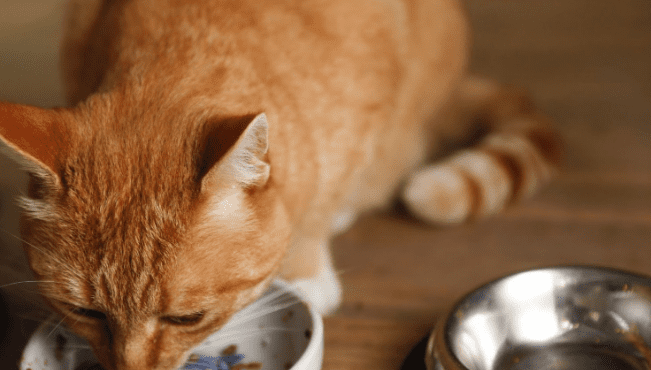
Just like human babies, kittens grow a lot in their first year of life. The type of food and how much a kitten eats directly affects its growth rate and development. By ensuring your kitten is on a proper feeding schedule, you will be able to monitor their growth and ensure they are receiving adequate nutrition.
Feeding program for the first week
A kitten usually weighs around 85-104 g at birth, but will quickly gain weight during nursing. For the first few weeks of life, a newborn kitten will be completely dependent on its mother for food. His eyes and ears are closed at birth, so he will rely on the pheromones given off by his mother to find milk and warmth. Most cats do well without human intervention, but if a kitten needs to be bottle-fed because the mother cat is absent, ill, or rejects it, we recommend weighing the kitten regularly to ensure that its weight reflects the kitten’s healthy, normal growth rate.
A kitten will nurse for about 45 minutes every 2 to 3 hours for the first week of life. The rest of the time we will spend sleeping. Bottle-fed kittens should consume about a tablespoon, or 15 ml, of special cat formula at each feeding. This takes a long time to bottle-feed a newborn kitten, so if possible, try to keep the kitten with its mother or a nursing cat that can feed it.
By the end of the first week, the kitten’s ear canals will have opened and, if it eats the right amount, it should weigh around 113g. Weight gain should be monitored using a gram scale, such as those used to weigh food in the kitchen.
Leer mas Bedlington Terrier: characteristics of the dog breed
See also: Awards for the best cats
Feeding schedules in weeks two and three

A 2-3 week old kitten will still need to be fed every 2-3 hours and should consume at least 1/2 tablespoon of milk or formula with each meal. If a kitten is being nursed by its mother, you will need to track its weight to know whether it is getting enough food or not. Between the eighth and eighteenth day, his weight should increase to around 280 g and he will begin to crawl shortly after opening his eyes.
By the end of the third week, the kitten will be able to get up and start interacting with its siblings. Play behaviors, ear nipping, fighting and exploring will begin and are important parts of socialization.
Leer mas Labrador: Characteristics of the dog breed | aeinoticia
Feeding schedules in weeks four and five
During weeks four and five the kitten will slowly increase the amount of food he eats in one meal. Feeding will be less frequent and it will be necessary to provide the kitten with a bowl of formula or other liquid food for it to start drinking.
By the end of the fifth week, the kitten should nurse only three times a day, but should consume about 3 tablespoons of milk or formula at each meal.
A kitten should weigh around 400-450 g by 4-5 weeks of age if it eats enough food. By the end of the fifth week, you should give your kitten more food from the dish than it consumes while breastfeeding.
The food should be transitioned from liquid to solid, using less and less water with canned kitten food over several weeks. This will be a tricky stage in a kitten’s life as he usually ends up pawing at his food, but it is a necessary step to begin weaning him from his mother’s milk.
Leer mas Cats and Mice: Potential for Disease and Other Dangers
See also: The best types of catnip
Sixth week nutrition plan
At six weeks of age, a kitten should eat solid food four times a day and nurse less. Solid food should gradually become less watery and dry kitten food should be introduced along with a bowl of water.
At the end of the sixth week, reduce the number of meals to just three per day. If you have several kittens, be sure to provide a few bowls of canned and dry food so the cats don’t become aggressive.
Feeding schedules in weeks seven and eight
Limited nursing sessions should be allowed until the kittens reach two months of age, assuming they all eat the kitten food offered to them three times a day. The mother cat may become separated from her kittens by constantly trying to nurse more than she should, but by the end of the eighth week, a kitten should weigh about a pound thanks to the combination of limited nursing and regular cat food.
Leer mas How to care for a fat cat
Feeding a kitten for 8 weeks
Once the kitten is past eight weeks of age, it should be fed regular kitten food twice daily. Solid food should not be a problem for kittens of this age, but they may occasionally try to nurse.
Between eight and ten weeks of age, a kitten should be fully weaned and ready to leave its mother if you intend to find it a new home. The first vaccinations are usually given around eight weeks of age, so when kittens are seen by the vet you can be sure they are raised properly.
latest posts published

Belgian Malinois: characteristics of the dog breed

Norwegian Buhund: characteristics of the dog breed
Caring for the Chinese Water Dragon

The best brushes for cats

How to choose the best chew toys and treats for your dog

How to train your puppy to walk on a leash

Czech Terrier (Cesky Terrier): characteristics of the dog breed

Pembroke Welsh Corgi: characteristics of the dog breed

The best bags for carrying cats