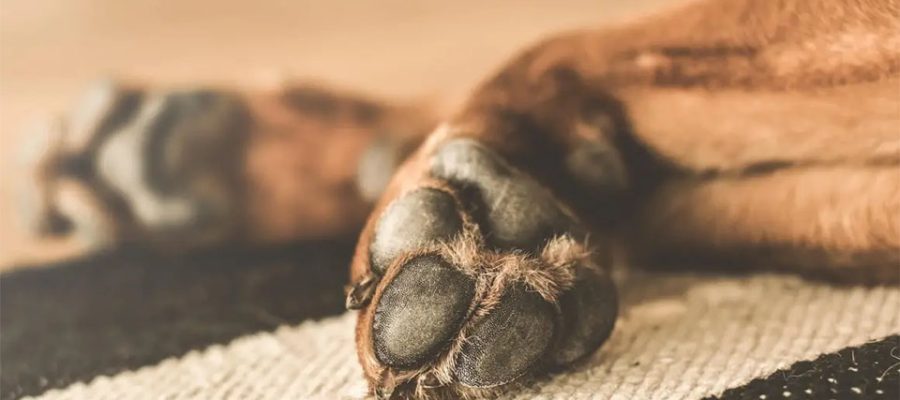
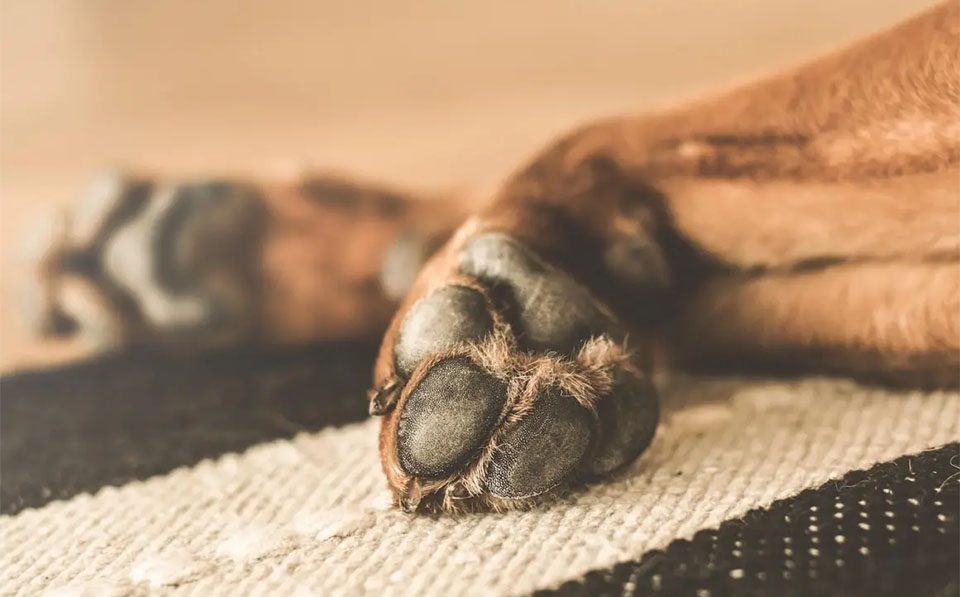
Dogs spend a lot of their time on the move, so it’s easy to see why it is crucial to look after our dog’s paws. The pads give warmth to their feet, offer grip, assist with stability, help in slowing down and halting, and serve as shock absorbers for the bones and joints in the dog’s feet. Although they are strong and made to handle plenty of activity and wear, they still encounter some troubles.
It is necessary to inspect your dog’s paws often for any issues and take actions to keep them healthy and safe.
Signs of Paw Problems and Injuries in Dogs
Symptoms:
- Lick and chew the affected paws
- Limp
- Pads red and inflamed
- Damages and losses
- Hair loss
- Ulcers with crusts and blisters
- Cuts, abrasions and tears
- Chapped and broken nails
- Dry and cracked bearings
- Refusal to walk or bear weight on my legs
- Cysts and growths
- Bleeding
- Bad smell coming from the paws
Causes of dog paw problems and injuries
Allergies
Just like people, pets can also suffer from all types of allergies. Allergic pets itch, especially on their paws, and usually bite, lick, or chew to try to relieve the itching. They will also be more likely to have chronic ear and skin infections and anal gland problems. In some cases, excessive licking can cause irritation or sores and make the paw more susceptible to secondary fungal and bacterial infections. Pets that lick their paws excessively should be evaluated for allergies by a veterinarian.
Leer mas Kitten development in the first six weeks of life
Fungal and bacterial infections
Many different species of bacteria and fungi normally exist on the animal’s pads, but occasionally these organisms can grow out of control and cause infections. Bacterial and fungal skin infections are common in dogs and often involve the paws.
Signs of a paw infection include licking and chewing on the paw, redness, swelling, pain, itching, and discharge. Usually, the skin between the toes and other skin folds are affected by itching, redness, oily discharge, and sometimes brown discoloration of the nails.
These infections can sometimes be secondary to an allergy. Your veterinarian is the best person to diagnose an infection in your pets and can prescribe a variety of treatments, including topical creams, wipes and washes to treat them.
See also: Best gifts for dog lovers
Leer mas Japanese Chin (Japanese Spaniel): characteristics of the dog breed
Nail problems
Long nails: Long nails are common and can have many negative consequences for your dog. Long nails can make walking your dog more difficult. When a dog’s nails come into contact with hard ground, the hard surface pushes the nail into the nail bed, creating pain for the dog and this can put pressure on all the joints of the fingers. Long nails also increase the chances of your pet suffering from a broken or torn nail.
Ingrown toenails: Nails that are not trimmed properly or that wear down naturally from walking outdoors can become painful ingrown toenails.
Broken nails: Broken or fractured nails occur when your dog catches his toenail on something. A common scenario is when a dog comes in from outside limping and sometimes bleeding, and upon closer inspection, a bruised toenail is seen. Broken and fractured nails can be very painful and bleed frequently, so they are best treated by a vet.
 How to stop meowing loudly in cats
Dry and cracked bearings
Pets’ paws should be textured so they can gain traction on smooth surfaces. However, a number of factors, including warm pavement, winter conditions, chemicals, dry air, exposure to rough surfaces, and excessive licking, can cause dry, cracked pads. Dry, cracked paws can be painful and put your pet at risk for infection.
Burns and blisters
If it’s too hot to go outside barefoot, it’s too hot for your dogs! Always touch the floor with the bottom of your bare hand before letting your dog walk on it. If you can’t comfortably keep your palm on the asphalt for 10 seconds or more, it’s too hot for your dog’s paws.
Unfortunately, pets can suffer from paw burns if they walk on surfaces that are too hot. Burnt paws may appear swollen, red, or blistered. Paw burns are a serious medical problem and require prompt attention from a veterinarian.
Cuts and abrasions
Cuts, abrasions and lacerations can occur at any time and are common as dogs run and play on a variety of terrains. It is important to be aware of sharp objects on the ground when walking your dog and make sure you provide adequate protection when running on rough or uneven ground or pavement. It is not uncommon to find foreign objects such as small stones, sticks, broken glass and debris in cuts.
Leer mas Saint Bernard: characteristics of the dog breed
parasites
Ticks are known to hide between pets’ toes, where they can cause all kinds of problems, including pain and infections. It is best to have a vet remove the tick. If you can’t get to the vet, use tweezers or a special tick removal tool to grasp the tick by the head and gently pull it out. The head must come off along with the body for removal to be successful.
Pets can also suffer from mite infestations, which can cause scaling, hair loss and bumps. Your vet will be able to run tests to diagnose and treat mites.
Cysts and growths
Cysts, nodules and growths can usually appear on the dog’s paws or between the toes. Contact your vet if you notice a cyst and he can treat it and remove it if necessary.
Dog paw care and problem prevention
Give your dog a pedicure
Your dog’s nails should be trimmed when they grow long enough to touch the ground while walking. How often you should trim your dog’s nails depends a lot on your dog – some breeds may not need much trimming.
Nail trimming should be a smooth process and a stress-free experience for you and your dog. Teaching your dog to accept handling of his feet can make trimming his nails easier. Avoid holding your dog down to clip his nails when he shows signs of stress and fear, because just like people, they worry and this will make the task more difficult or impossible in the future. There are many very helpful resources that make nail trimming less stressful for you and your dog.
Consider the weather conditions
During the summer it is important to avoid walking your dog on hot sidewalks or sand. During the winter, salt and de-icing chemicals can cause sores on your dog’s paws and can be ingested when he licks his paws. Try to avoid these things and after walks wash your dog’s paws in warm water to remove chemicals and salt and use a moisturizer to prevent the paws from drying out and cracking. Don’t use human-grade lotions or moisturizers on your dog; Consult your vet for a moisturizer specifically for dogs.
Perform paw checks
It is important to check your pet’s paws, preferably after they have played outside or done strenuous physical activity, as they are more likely to cause injury. This is also the time when a foreign object is most likely to get trapped between the cushions. Take a look, remove any debris, and watch out for any sores or blisters
Apply first aid
It is important to have a first aid kit for minor injuries to your dog. If you find a small cut or blister on your dog’s feet, clean it with an antibacterial cleanser and bandage the area as best you can. You may also want to use a dog boot to prevent further damage. Keep an eye on your dog and contact your vet.
Read also: The cutest themed dog costumes
latest posts published

Belgian Malinois: characteristics of the dog breed

Norwegian Buhund: characteristics of the dog breed
Caring for the Chinese Water Dragon
The best brushes for cats

How to choose the best chew toys and treats for your dog
How to train your puppy to walk on a leash

Czech Terrier (Cesky Terrier): characteristics of the dog breed

Pembroke Welsh Corgi: characteristics of the dog breed

The best bags for carrying cats