

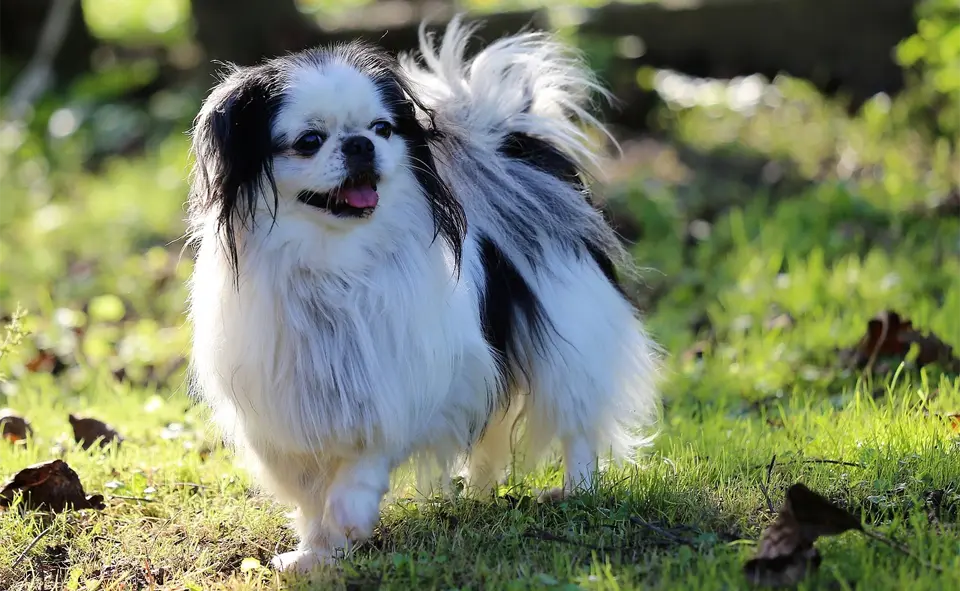
Characteristics, history, care tips and useful information on the Japanese Chin breed The Japanese Chin, also known as the Japanese Spaniel, is a relatively rare breed of saloon dog with a very noble and ancient heritage. Despite the name, it is believed to have originated in China before becoming popular in Japan.
They are known for their even temperament, loyalty and affection. They are often described as «cat-like» and can be very attached to being in their owner’s arms.
Overview of the Japanese Chin breed
GROUP: Lounge puppy
HEIGHT: 20 – 28 cm (at the withers)
Leer mas How to stop meowing loudly in cats
WEIGHT: 1.8 – 4kg
FUR AND COLOR: Long, soft and silky fur. There are many color varieties including black with white, lemon with white, brown with white, black or black with tan.
LIFE EXPECTANCY: 10-14 years
Characteristics of the Japanese Chin dog
| Level of affection | Mare |
| Friendliness | Mare |
| Friendship with children | environment |
| Friendship with other animals | environment |
| The need for movement | environment |
| Desire to play | environment |
| Energy level | environment |
| Training | environment |
| Intelligence | Mare |
| Tendency to bark | microphone |
| mute | environment |
History of the Japanese Chin breed
The longevity and aristocratic history of Japanese Chin dogs are not in doubt, but their first appearances are still debated by historians.
Leer mas Saint Bernard: characteristics of the dog breed
Although they are believed to have originated in China (or even Korea), Japanese nobles have been known to breed this highly prized breed for more than 1000 years.
In the mid-19th century, when Japan began trading with other countries after nearly two centuries of self-imposed isolation, Chin dogs were given as highly prized gifts to naval officers or sold to visiting sailors or merchants. This led to their introduction into Western countries.
When the future king of Great Britain, Edward VII married Alexandra in 1863, she received a Chin dog as a gift and became an ardent lover of the breed, helping to popularize it in Britain and America.
The breed was first recognized by the AKC in 1888 and is often called the Japanese Spaniel. Chin dogs are related to the Pekingese breed.
Leer mas How to restrain your dog in the car safely
Care of the Japanese Chin breed
Although it has a long, silky and shiny coat, it is not that difficult to take care of it compared to other breeds that have the same type of coat.
It is recommended, however, that the fur is brushed at least weekly and this is extremely important especially when they are in the moulting period. There is no need to clip or trim the fur.
These dogs’ nails are known to grow very quickly, so it is important to ensure that they are always trimmed to the right length.
They are intelligent but often stubborn, so a little extra patience and persistence is required when it comes to training them.
Leer mas What to do if your dog has a loose tooth
They are not very active, but you need to get an adequate amount of exercise. Just because they like to be hugged, doesn’t mean they won’t appreciate a long walk.
They are also famous for their climbing ability, which is why they are nicknamed «like cats». It is not unusual for him to sit in a high, comfortable place in the house.
Although they are quite reserved with other people or animals, they are generally very sociable and loyal if properly trained.
Common health problems
They are generally a healthy breed, but can be prone to some congenital problems, and because they are classified as a flat-faced/brachycephalic breed, they require extra care during hot weather or during exercise.
A good breeder will keep potential parents safe, to minimize the risk of the puppies inheriting health problems.
- Patella luxation
- Ophthalmic problems include cataracts or dry eye syndrome (keratoconjunctivitis sicca), entropion (when the eyelashes turn inward), and corneal abrasions.
- Heart murmur
- Epilepsy
- GM2 gangliosidosis, also known as Tay-Sachs disease, a potentially fatal neurological condition can affect this breed. DNA tests will ensure that the disease is not transmissible.
Because of their short muzzles, they are more prone to sunstroke and respiratory problems, so extra caution is needed on hot days. Using a harness, rather than a collar and leash, can reduce tension around the neck.
Diet and nutrition
Although it is very easy to be tricked into feeding them around the clock or spoiling them with leftovers, the Chin breed is prone to obesity, so it is very important to provide them with healthy, high-quality, properly portioned food.
The amount of food varies from dog to dog, age and activity level.
There must always be sufficient fresh water, and this is very important due to the breed’s sun intolerance.
See also: Best small dog breeds for small spaces
Advantages
- The Japanese Chin dog is a great companion; they are generally sociable, loyal and tactile.
- Although they have long hair, they do not require intensive care.
- They are recommended for apartment living due to their size, need for exercise and quiet personalities.
disadvantage
- They have an independent personality with a strong will. Extra training is required if you want to enter them in obedience competitions or dog sports.
- Due to heat intolerance, the Chin is not exactly suited to regions where there may be heat waves.
- They are prone to obesity, so it is very important that they do not become sedentary or eat too much unhealthy food.
Other dog breeds and additional information
It is important to educate yourself as much as possible about providing a suitable home for the Japanese Chin, seek out reputable breeders or choose the adoption route, and be sure to speak to other owners of this breed for more details.
If you are interested in similar breeds, you might also like:
There are many dog breeds that have different traits and personalities – doing lots of research will help you figure out which one best suits your lifestyle!
latest posts published

Belgian Malinois: characteristics of the dog breed

Norwegian Buhund: characteristics of the dog breed

Caring for the Chinese Water Dragon

The best brushes for cats

How to choose the best chew toys and treats for your dog

How to train your puppy to walk on a leash

Czech Terrier (Cesky Terrier): characteristics of the dog breed

Pembroke Welsh Corgi: characteristics of the dog breed

The best bags for carrying cats
