
It can be quite unsettling to witness your dog vomiting, but try not to panic. In many cases, this is simply a natural and protective mechanism of their body at work. Much like humans, our loyal companions occasionally need to expel harmful substances from their system as a way of preventing potential harm. Vomiting, in this sense, acts as a safeguard, helping to rid their body of irritants before any serious issues arise. To better understand what might be causing this reaction and how you can provide the right care and comfort, let’s explore this topic in more detail together.
Why is my dog vomiting?
Before you can help your dog, it is important to understand why he is vomiting. Here are the most common causes:
1. Ate something wrong

It’s happened to everyone: once you weren’t paying attention and your four-legged friend caught something that wasn’t meant for him. Chocolate, grapes or onions are just a few examples of foods that can harm your dog. Not sure exactly what your dog can and can’t eat? You can find it in our guide The 10 most common dangerous foods for dogs.
Leer mas Discover the 8 smallest dog breeds in the world
2. Digestive problems
Digestion is a complex process and things can get confusing. If your stomach, intestines, or liver aren’t working properly, vomiting may be one of the first signs.
3. Viral or bacterial diseases
Sometimes there is also a virus behind it. Parvo or rotavirus are examples of pathogens that can cause acute vomiting.
4. Foreign body ingested
Did your dog swallow something while playing? Objects that cannot be digested often cause vomiting.
5. Parasites
Giardia or worms can also be the cause, especially if the dog is young or spends a lot of time outdoors.
Leer mas Profile of the magnificent rosella | This captivating bird has gained
6. Kidney problems
If your dog continues to vomit, it could indicate kidney problems. Other signs they are: less appetite, weight loss, increased drinking and urination, diarrhea and unpleasant breath.
7. Balance disorder
Do you know this about yourself? If the vestibular system is disturbed, nausea occurs quickly. It’s no different with your dog.
8. Gastric torsion
A stomach upset is an emergency! If your dog suffocates unsuccessfully but nothing comes out, you should go to the vet immediately. Read more about Stomach torsion in dogs.
Does your dog often have digestive problems or vomits?
So let’s take a look at his diet together. Do you understand it? real food and the right amount? Answer a few short questions and receive a tailor-made meal plan for your pet, for free of course.
Leer mas Helping your dog with constipation
How often does your dog vomit?
Did you know that one in five dogs vomits once or twice a month? If your dog vomits once and then wakes up again, you don’t have to worry. Maybe he simply ate too fast. But if it happens several times, it is better to go to the vet. We distinguish between acute and chronic vomiting.
Acute vomiting
This is more common and means this Vomiting occurs suddenly and most of the time too finished quickly AND. Often, after vomiting once or twice, your dog will be completely fine again. This can be harmless, but it can also be an emergency – watch your darling carefully!
Chronic vomiting
If your dog vomits for more than two days, it is called chronic vomiting. You should definitely contact your vet here. The cause can be an allergy or even a serious illness.
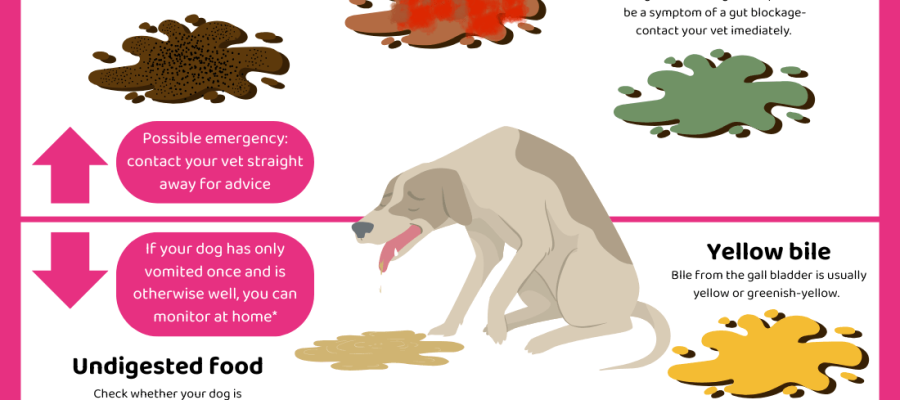
What does your dog’s vomiting look like?
Your dog vomits undigested food
This is also called regurgitation. Your dog may have pain when swallowing or have digestive problems. This form of vomiting can occur very quickly after eating.
Leer mas Boston Terrier profile | This charming canine, full of elegance and personality
Your dog is vomiting mucus
When your dog vomits mucus, stomach mucus comes out with it. This is not good because this mucus normally protects the stomach wall. This often happens when the stomach is empty. Does this happen often? Then contact your vet.
Here you can read the reasons for this Vomiting mucus can be.
Your dog is vomiting bile
The thin, yellowish fluid is produced in the liver and stored in the gallbladder. This happens even when the stomach is empty, especially in the morning after a long night. Once it is no reason to panicbut if it happens frequently, talk to your vet.
Here you can find out everything about dogs vomit bile.
Your dog is vomiting blood
This is a warning sign! Either your dog ate something poisonous or there is something wrong with his body. Blood can indicate serious illnesses. Contact your vet now! Did he swallow a sharp object? Then absolutely don’t try to make him vomit, it could make things worse!
Would you like to know more about dogs? vomit blood? Read everything in this guide.
Your dog eats grass
You may have heard that dogs eat grass to vomit. In fact, many dogs eat grass every day and few do so because they feel nauseous. Eating grass is completely normal behavior for dogs, so don’t worry!
When does my dog feel sick?
Before your dog vomits, he usually feels nauseous. These signs tell you that your dog is sick:
- He is restless and cannot find a comfortable position
- Belch or belch
- He’s salivating more than usual
- Eats more slowly or has no appetite
- He smacks his lips and swallows often
What can I do if my dog is sick and vomiting?
Give as a gift to your darling lots of rest and let him sleep. This will help him recover. You have to be especially careful with puppies, they are still very sensitive. Make sure your dog drinks enough. This is important so that it does not dry out. Are you worried? So it’s better to go too much than too little veterinarian. There are several Drugwhich can help your dog.
When should I go to the vet?
Go to the vet immediately if:
- Your dog may have eaten something poisonous
- Your stomach is bloated or becomes hard
- He keeps vomiting and doesn’t stop
- Vomits regularly (several times a week)
- Has a fever (over 39.5 degrees Celsius)
- He drinks a lot and has to pee constantly
- It can’t even hold water
- Staggers or has balance problems
- Vomits blood
latest posts published

Belgian Malinois: characteristics of the dog breed

Norwegian Buhund: characteristics of the dog breed

Caring for the Chinese Water Dragon

The best brushes for cats

How to choose the best chew toys and treats for your dog

How to train your puppy to walk on a leash

Czech Terrier (Cesky Terrier): characteristics of the dog breed

Pembroke Welsh Corgi: characteristics of the dog breed

The best bags for carrying cats
