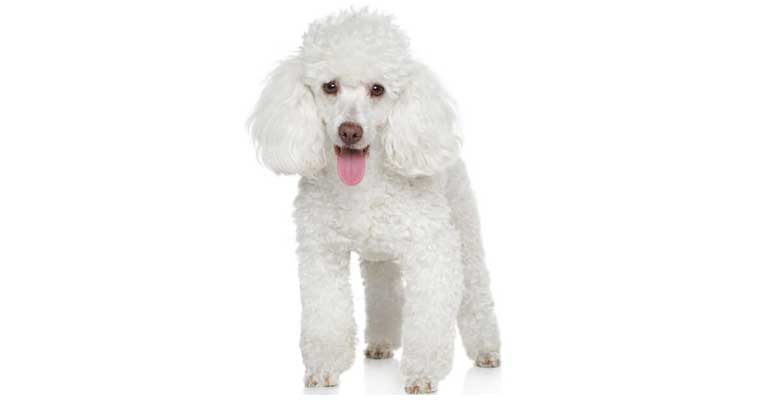
Origin and history The Poodle is a dog breed originally bred for hunting in water. His job was to recover killed waterfowl. In reference to this breed’s activity, the Poodle is called «Caniche» in France. «Dog» is the French name for the female duck. The poodle was bred from the «Barbet», a French breed of retriever, search and water dog. The country of origin of the poodle is considered to be France, although some sources also mention Germany. The German name also contains a reference to the breed’s actual area of responsibility; «puppeln» means «to wallow in water» in Old German. Targeted breeding of the poodle began in the late 19th century. At that time there were initially the size classes «large poodle» (also called royal poodle) and «small poodle», later the «toy poodle» was added and in the 1990s the «toy poodle».
I wait
Body type, height and weight
Poodles have a rectangular shape, which means their body length is greater than their height at the withers. The dogs must be well muscled and have an elegant and proud expression.
Depending on the size class, animals differ in body size and weight. According to the (FCI) standard, all size classes should have the basic proportions of the small poodle and represent enlarged or reduced images of it. Here is what the height standard prescribes:
Standard Poodle (Royal Poodle): Standard Poodles should be over 45cm and a maximum of 60cm tall, with the standard allowing a tolerance of 2cm. Standard poodles reach a weight of 18 – 28 kg.
Leer mas Panda cory catfish profile
Miniature poodle: The height must be greater than 35 cm and maximum 45 cm. An adult small poodle weighs between 7 and 17 kg.
Miniature poodle: Toy Poodles should be over 28cm and a maximum of 35cm tall. Toy poodles weigh 3 to 6 kg.
Miniature poodle: For toy poodles, the standard is a height of over 24 cm up to a maximum of 28 cm, with a tolerance of 1 cm. Toy poodles weigh a maximum of 3 kg.
Fur and colors
According to the (FCI) standard, solid-colored poodles in the colors black, white, brown, gray, apricot and fawn are desirable. The colors “sable” (“sable”) and “cafe-au-lait” (coffee-colored) are not recognized by the standard. There are also two-tone poodles such as: B. black and tan, also called “black and tan” (tan means “tawny”), black and white (“harlequin”), apricot white (“apricot-harlequin”) and “brindle”. The “merle” pattern variant is now also found on poodles. In this fur drawing, the base color of the fur is lightened in some places. However, even these fur colors and patterns do not correspond to the standard.
Leer mas Provide first aid if your dog is in danger of suffocation
Character and essence
What does the core of the poodle describe? Poodles are very intelligent and obedient dogs. The Poodle, along with the Border Collie, is said to be the most intelligent dog breed in the world. Raising them is relatively easy, but you should always keep in mind that the breed was originally used for hunting. The guarding instinct can be quite pronounced and most poodles are quite suspicious and reserved towards strangers, but rarely aggressive. Poodles will do almost anything to please “their” people and love praise. This, combined with their affectionate, people-oriented nature, makes them very pleasant companion dogs. Harshness in education and training disturbs sensitive dogs and is inappropriate with poodles, otherwise the dogs will lose trust very quickly.
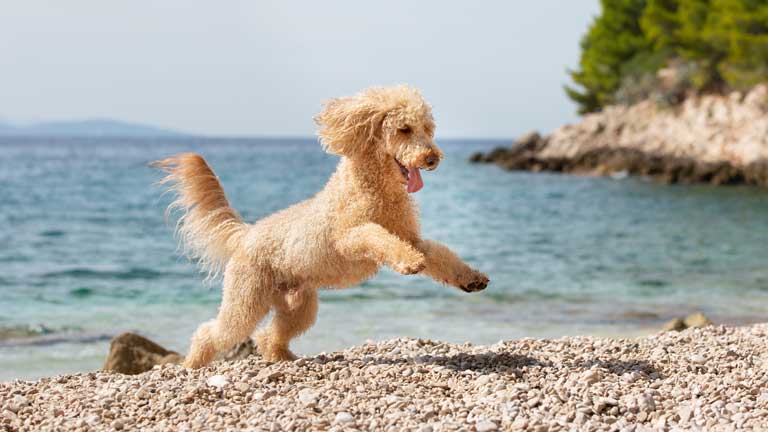
In line with their original range of use, most poodles love retrieving and are enthusiastic about water. Nowadays, however, poodles are (almost) no longer seen as retrievers for hunting. Poodles can be found in various dog sports, such as: B. Agility, Obedience, Man Trail and also in protection dog sports. Standard poodles are also suitable as guide dogs for the blind and are also used as body detection dogs. The breed’s great empathy makes them ideal therapy dogs. Cohabitation with other dogs and pets is usually not problematic, although one or two poodles may have a passion for chasing cats.
Is a poodle right for me? How should it be held?
taken
Poodles love to move and love to be encouraged. However, the urge to move is more moderate in toy and miniature poodles. Most small poodles and almost all large ones, however, are real sports enthusiasts. Whether large or small, the poodle needs not only physical exercise, but also mental exercise. Smart toys and even educational tricks are suitable for this purpose.
Nutrition
Treatment
Poodles usually get one of the typical «poodle hairstyles» when they are clipped. However, shearing was not introduced for fashion reasons, but for very practical reasons. To protect the heart and lungs in the cold water, a long mane was left standing. The front and hind legs were shaved to facilitate swimming, but longer fur was kept around the joints to keep them warm. The fur left longer in the loin area served to protect the kidneys. To be able to maneuver better in the water, a tassel was left on the tip of the rod as a rudder. The hair bands, called “top knots,” also had practical reasons. On the one hand they were supposed to prevent the fur from falling into the poodle’s eyes, but on the other hand they were also easier for the hunter to see. These original hunting cuts were the saddle clip and the lion clip. Nowadays you often see Continental, Puppy, Fashion, Lamb and Teddy cutouts. Poodles clipped for grooming are called woolly poodles.
Leer mas Steckbrief Banggai-Kardinalbarsch
But there is another way to groom your poodle that is rarely seen nowadays. Have you ever heard of the Schnürenpoodle? In this variant the fur forms individual tufts of hair, the so-called cords. However, this way of modeling a poodle is not successful for all representatives of the breed. The fur must have the ability to organize itself into individual cords, otherwise the dog will become extremely matted and serious skin problems may occur. If you want to switch from wool fur to cord care, it is best to test on a freshly washed dog with approx. 10 cm long pile at a pleasant temperature to see if the pile tends to form strings when air dried. When caring for a tethered poodle, it is important to precisely separate the individual cords from each other. After bathing, you can let your poodle hang out to air dry (note, this may take days) or blow dry him.
Typical diseases
Some diseases typical of the breed may occur in poodles:
Hip dysplasia (HD): This disease causes narrowing of the hip joint and subsequently usually leads to osteoarthritis.
Elbow joint dysplasia (ED): Elbow joint dysplasia is similar to hip dysplasia, with elbow joint dysplasia affecting the elbow joint. Even in this case, osteoarthritis can develop in an advanced stage.
Leer mas Weimaraner profile
Ectopia of the ureter (ectopia of the ureter): The disease is evident due to the dog’s incontinence. Female dogs are affected more often than male dogs. The cause is a malformation. In this disease, the ureters do not open into the urinary bladder, but rather into the urethra, vagina, or uterus. Fortunately, the malformation can be corrected through surgery.
Joint diseases: Standard Poodles can suffer from hip and elbow dysplasia. Both diseases are generally more common in large (and heavy) dogs or dog breeds and can also be hereditary. Good prevention is important. By providing the right nutrition during puppyhood, you can support your Standard Poodle’s optimal physical development and health. Under no circumstances should you switch to adult food too early, as it does not have the calcium-phosphorus ratio that a growing young dog needs.
Patella luxation: In this disease, the kneecap comes out of its seat and “luxates”, causing severe pain. If the kneecap repeatedly luxates, this causes damage to the cartilage in the knee joint. Treatment options include targeted muscle development to keep the kneecap in place or, in more severe cases, surgery.
Progressive Retinaatropy (PRA): In PRA, the retina dies, eventually causing blindness. PRA is most common in toy, miniature and small poodles. The cause lies in a hereditary genetic defect. The disease is currently not curable.
Cataract: In cataracts, the progressive clouding of the lens of the eye also leads to blindness. However, if diagnosed and treated early, it is often possible to preserve vision.
Sebadenitis: In this disease, the sebaceous glands in the skin are destroyed by an inflammatory reaction in the body. The skin becomes calloused and dogs suffer from hair loss. The exact cause of the disease is not known, but it is believed that it may be hereditary. It is found more often in littermates than in unrelated dogs. Not only can poodles suffer from this disease, but it also occurs in Schnauzers, Magyar Vizslas, Hovawarts and other breeds. The disease is treatable but not curable.
Frequently Asked Questions About Poodles
When can you have a poodle neutered?
Castration is recommended after reaching sexual maturity.
When does the breed become sexually mature?
With the exception of standard poodles, all size classes usually reach sexual maturity after twelve months at the latest. In the case of standard poodles, it may occasionally happen that female dogs do not come into heat for the first time until they are eighteen months old.
When does a poodle become fully adult?
Toy and dwarf poodles reach full growth at the end of the first year of life at the latest. Small poodles reach their final size at the age of eighteen months at the latest. Standard poodles are fully grown at the latest when they reach their second year of life.
Poodle as a family dog – is it possible?
Poodles make great family dogs. Their intelligence and strong “will to please” make them easy to train. Poodles are loyal companions and enrich family life with their cheerful nature.
latest posts published

Belgian Malinois: characteristics of the dog breed

Norwegian Buhund: characteristics of the dog breed
Caring for the Chinese Water Dragon

The best brushes for cats
How to choose the best chew toys and treats for your dog
How to train your puppy to walk on a leash

Czech Terrier (Cesky Terrier): characteristics of the dog breed

Pembroke Welsh Corgi: characteristics of the dog breed

The best bags for carrying cats