The German Pinscher is a fascinating breed that holds a special place in canine history, officially recognized by the Fédération Cynologique Internationale (FCI). While its origins remain somewhat mysterious, the breed’s lineage sparks intriguing debates among enthusiasts and experts. Some theories propose that the German Pinscher evolved from the Terrier, while others suggest the Terrier may have descended from the Pinscher. One particularly compelling hypothesis traces this breed back to an ancient turf dog that was bred over 3,000 years ago.
Regardless of these historical uncertainties, what we do know is that the German Pinscher is among the oldest dog breeds native to Germany. Historically, these versatile dogs thrived in rural areas where they played vital roles. Whether assisting as transport companions, guarding farms, or expertly hunting rats and mice, they embodied both skill and independence. Remarkably adaptable, they often roamed freely in barns and stables, hunting for their own meals without much human intervention. It wasn’t until the late 20th century that clarity emerged in distinguishing the different Pinscher variations. Prior to the adoption of the modern breed standard, there was a multitude of Pinscher types with varying coats, colors, and sizes. This early diversity adds another layer of richness to their story, making the German Pinscher not only a cherished companion but also an enduring testament to canine heritage..
I wait

Body type, height and weight
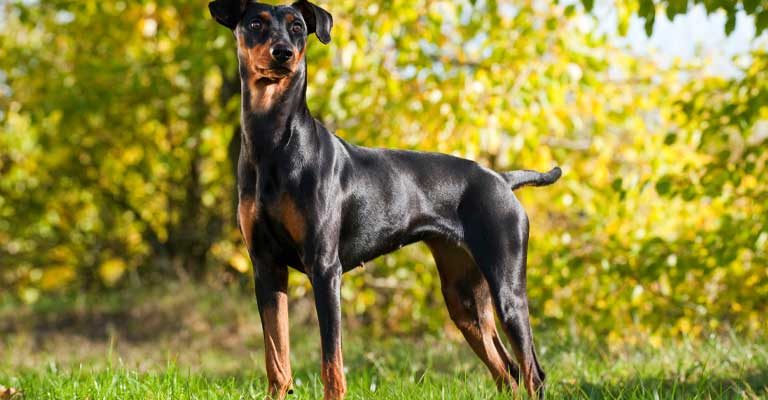
German Pinschers are medium-sized dogs with an athletic, square build and a slightly sloping back. Their fur is smooth and close-fitting. The foldable V-shaped ears are set high, with the inner edges resting against the cheek. German animal protection law prohibits cropping of ears and tails, which was previously common practice.
Leer mas Which dog breeds are the 7 largest
Pinschers reach a size of 45 to 50 cm and a weight of 14 to 20 kg. Females are slightly smaller and lighter than males.
Fur and colors
Character and essence
The German Pinscher is a confident, intelligent and active dog. His history as an independent farm dog means that even today he has a certain independence and likes to make decisions on his own. His vigilance is also strong and he will reliably report anything unusual happening around him. Therefore, loving consistency in the education of the German Pinscher is particularly important. German Pinschers are real powerhouses, they are very active, adventurous and fun for everyone. If the Pinscher is sufficiently mentally and physically engaged, he turns out to be an affectionate, loyal and relaxed companion who loves and demands extensive cuddles at home.
Is a German Pinscher right for me? How should it be held?
German Pinschers are suitable for active people who have a lot of time and are willing to keep the intelligent and confident dog physically and mentally occupied. The Pinscher loves long walks with his people, especially when there is a lot to discover along the way. On one Go jogging he’s just as happy to be involved in different things Sports for dogs like Agility, Mock training or mantraling. The main thing is action, because the Pinscher is a little bundle of energy and gets bored quickly. As an owner, you should be able to lovingly set limits on the Pinscher’s hunting instincts and confident nature. If the Pinscher does not trust his owner to take on the role of leader, he will try to take on this role himself and make his own decisions. Therefore, frankness and consistency are very important in education, without being harsh or pressured. The Pinscher must trust his pack leader and be able to understand his decisions. He therefore needs a safe person at his side and is not a dog for beginners. Pinschers certainly feel more comfortable in rural areas, ideally in a home with a garden they can look after. However, since they are very adaptable, they can also be kept in the city if the capacity is sufficient.
taken
German Pinschers are powerful little animals that need a lot of exercise. A walk around the block is not at all enough for them. Long daily walks are a must. The Pinscher is always enthusiastic about sporting activities. Mental work should also be part of the plan to mentally challenge the intelligent dog.
Leer mas Yellow, slimy stools in your dog
Nutrition
The German Pinscher has no specific requirements for its diet. To lay the foundation for a long and healthy life, you should always use high-quality dog food or dog food. Here you will find advice on how to find the right food for your furry friend.
Treatment
The German Pinscher is an extremely easy dog to care for. It is enough to brush his fur every now and then. His ears should be checked regularly. As with all dogs, it is important to take care of their teeth and teeth and trim their nails when necessary.
Typical diseases
German Pinschers are very hardy and healthy dogs, which is due to the fact that excessive breeding with associated health problems has never occurred. Testing for hip dysplasia (HD) is mandatory on farms, which is why this joint disease is becoming increasingly rare. Since the ear edges are very thin and have little hair, they are prone to injury (ear edge necrosis).
Frequently asked questions about the German Pinscher
Are Pinschers fighting dogs?
No, Pinschers are not included in the so-called «list dogs», whose breeding and keeping in Germany may be subject to certain restrictions.
Leer mas Keep rabbits on the balcony
How much does a German Pinscher cost?
From a reputable breeder, a Pinscher puppy usually costs between 1,200 and 1,800 euros. The cheapest “offers” on the Internet should make you suspicious, because they often go hand in hand with neglect of health and strength of character. A VDH member breeder should be chosen.
Is the German Pinscher a family dog?
The German Pinscher is an intelligent, active and sometimes stubborn dog that has many demands in terms of training and attitude. If he is exercised mentally and physically according to his needs, he can be a great family dog who bonds closely with his people. However, you should be aware that he is not a dog you can keep aside. It needs a lot of attention, activity and dog sense.
Do German Pinschers bark?
German Pinschers are very alert and alert. No stranger will be able to approach the house or apartment without being noticed, which they will announce with a short bark. However, Pinschers only become «yappers» when they are underused, bored and have no limits. Then they look for their own areas of responsibility.
Leer mas Your cat is about to give birth: everything you need to know
latest posts published

Belgian Malinois: characteristics of the dog breed

Norwegian Buhund: characteristics of the dog breed
Caring for the Chinese Water Dragon

The best brushes for cats
How to choose the best chew toys and treats for your dog
How to train your puppy to walk on a leash

Czech Terrier (Cesky Terrier): characteristics of the dog breed

Pembroke Welsh Corgi: characteristics of the dog breed

The best bags for carrying cats