Does your budgie rub its head against its food bowl or furniture, make quick head movements, gag, and eventually regurgitate grains and mucus? These behaviors, along with vomiting food and mucus, may indicate goiter inflammation, a common issue in parrots and other pet birds. This condition is very painful for birds and requires immediate attention. If you suspect your bird might have an inflamed goiter, don’t delay—consult a vet as soon as possible. For more details about goiter inflammation in birds and tips on how to prevent it, check out our blog article.
What is goiter?
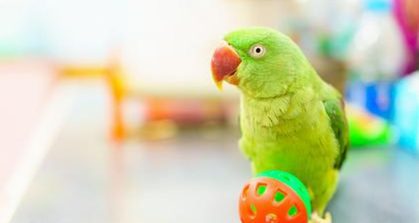
The goiter is a sac-shaped protuberance of the esophagus and is well developed depending on the bird species. It can be especially pronounced in birds that must store large quantities of food. It is part of the digestive system and serves to pre-inflate or soak food before it is transported further down the esophagus.
Illness or symptom?
Strictly speaking, goiter is not an independent disease, but a symptom that can be caused by several causes or diseases, such as diarrhea or a runny nose. The development is usually multifactorial, which means that several factors play a role: If the mucosa of the goiter is irritated, bacteria, viruses and fungi have an easy time: they essentially «sit» on the irritated mucosa and can multiply there unhindered and lead to serious signs of disease. Both infectious and noninfectious causes often play a role.
Leer mas Make your room bird-proof
Causes of goiter inflammation
A common trigger of goiter mucosal irritation and associated inflammation is keeping birds alone, for example with a mirror or plastic bird as a “partner substitute”. Birds often feed their partners by regurgitating food from their crops. Of course, the “partner” in the form of a mirror or plastic bird cannot accept the food, after which the bird swallows the porridge again. Due to repeated unsuccessful attempts to feed the partner and the subsequent regurgitation and swallowing of food, the mucous membrane of the crop becomes severely irritated and damaged. This is not only painful, but also forms the ideal basis for the reproduction of bacteria, viruses and fungi. The result is inflammation of the goiter. Other causes of mucosal irritation and ultimately inflammation include poisonous houseplants, highly acidic fruits, spicy food leftovers, or ingested foreign bodies.
Important: Grain mixes that are too large for smaller birds (for example, large grain mixes for parrots) can also cause goiter inflammation. It is therefore always important to ensure that the grain mixture used is suitable for the respective bird species.
In addition, a vitamin A deficiency and diseases such as gout or kidney weakness can also cause goiter inflammation. Finally, there are several diseases caused by bacteria, viruses, parasites and fungi that can also affect goiter, for example trichomonas and bird pox.
Symptoms of goiter inflammation
Inflammation of the goiter is manifested by the following symptoms:
Leer mas Cooling for birds in hot weather | How do I know if my birds are too hot?
- Feathers glued to the head and/or neck area
- Regurgitation of food and/or mucus
- Thickening of the goiter
- Runny nose and cough
- Appetitmangel
- Vomit
- Putrid beak odor (especially with Trichomonas infection)
- Maybe bloating, apathy, apathy
Symptoms can be severe or mild. They can also occur alone or in combination. Vomiting is an emergency in birds as they can choke on vomit. Depending on the underlying disease, other symptoms may also occur. For example, if the cause of goiter inflammation is chickenpox, additional symptoms of this disease such as purulent and possibly bursting blisters on the beak may occur.
Diagnose
If you suspect that your bird has a goiter infection, you should take him to the vet immediately, as such an infection is not only very painful, but can also be extremely dangerous and sometimes even fatal, depending on the pathogen and symptoms. To determine the cause, your vet will, depending on the severity of the symptoms, arrange for a fecal test, crop swab and/or x-ray of your bird. This is the only way to reliably determine the trigger and initiate promising therapy.
Treatment
Goiter inflammation is treated with different medications depending on the cause. If there is a bacterial infection, your vet will prescribe antibiotics for your bird, antifungal drugs are used for fungi, and antiparasitic drugs are used if there is a parasitic infection (e.g. trichomonas). If several pathogens are involved in the inflammation of the goiter, the combined use of several preparations is necessary. Your vet may need to aspirate the crop fluid to prevent your bird from choking. Infusions and force-feeding are often necessary to improve the general condition. If goiter inflammation can be traced back to poor posture such as solitary posture, these must be corrected to prevent recurrence. Hygiene is of crucial importance during treatment and as a prophylaxis; for example, water and food containers should be washed in hot water several times a day.
Conclusion
Leer mas Lovebirds profile | Under the name “Inseparables” (Agaporniden)
Not all diseases can be prevented, but as bird owners we often have a great influence on the well-being and immune system of our animals and therefore on the probability of infection and the course of the disease. The basis for a long and healthy life of birds is animal-friendly husbandry: sufficient space, free flight, companionship, healthy food, movement and activity.
latest posts published

Belgian Malinois: characteristics of the dog breed

Norwegian Buhund: characteristics of the dog breed
Caring for the Chinese Water Dragon

The best brushes for cats
How to choose the best chew toys and treats for your dog

How to train your puppy to walk on a leash

Czech Terrier (Cesky Terrier): characteristics of the dog breed

Pembroke Welsh Corgi: characteristics of the dog breed

The best bags for carrying cats