

If you see a dog licking his lips, you might assume he’s just eating. But what if there’s no food around? So what does licking your lips mean?
Lip licking is a type of dog communication. A dog licking his lips is using body language to let you know how he feels.
What is lip licking in dogs?
If you notice a dog licking his lips when there is no food, he is probably trying to send a message.
What does it mean when dogs lick their lips?
Dog trainer Turid Rugaas coined the phrase «calming signals» to refer to lip licking and similar behaviors in dogs. Lip licking is also often referred to as a calming gesture. Dogs display certain behaviors and actions when they feel stressed or uncomfortable, usually because there is something around them that they perceive as a threat. Dogs licking their lips usually send the message that they are worried.
Leer mas How to take care of a hairless cat
Dogs lick their lips to soothe and calm a person or animal they see as a threat, to ward off aggression. An example of this can be seen in dogs being scolded when their owners come home and see that the pet has had an accident on the carpet. A dog may not connect scolding with internal relief. Instead, it sees its owner as a threat. The owner may scream and approach him. The dog can offer a calming gesture by licking his lips and looking away. This is the dog’s way of saying that it poses no threat to the person behaving aggressively.
Dogs sometimes display calming gestures such as licking their lips and yawning when they are frustrated or confused. Many owners notice this during training sessions when their dogs have difficulty understanding what they are being taught.
If you notice lip licking, yawning, scratching, or sniffing the ground while training your dog, it may be time to stop the training session. A dog cannot learn new things when stressed. To end on a positive note, ask your dog to do something simple that he already knows, like sit. Reward with a treat and praise, then end the session. Try playing with your dog for a while to help him relax.
Another important reason why dogs lick their lips excessively is a health problem. A dog might lick his lips due to nausea, dental disease, or mouth pain. Look for other signs of illness, observe your dog carefully, and contact your veterinarian.
Leer mas How to stop your dog from growling
What to do when your dog licks his lips?
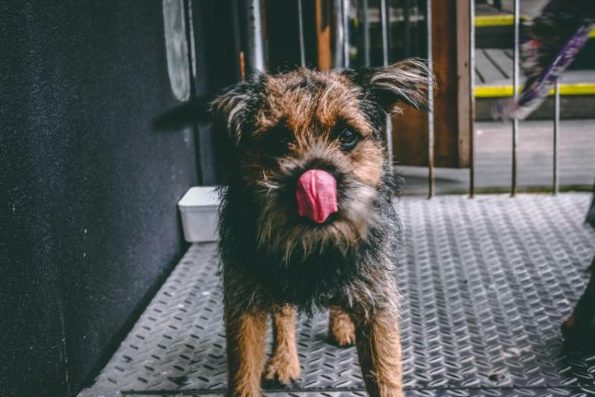
Although lip licking is usually considered a submissive gesture intended to prevent the escalation of aggression, it is still a sign that an animal is stressed and uncomfortable in a situation. This calming gesture may be the dog’s first attempt to eliminate the threat, such as stopping the owner from scolding him or getting another dog to stop barking at him. However, this does not mean that the animal will not become defensive if the perceived threatening situation continues. A defensive dog may resort to aggressive behavior if calming gestures fail.
If you see a dog licking his lips, back off and give him space to get more comfortable. Try to determine the source of the dog’s anxiety and eliminate it if possible. This can save you from a possible bite from a dog that feels the need to defend itself.
If your dog licks his lips when he sees the vet or some other place that makes him nervous, try redirecting his attention in a positive way. You can ask him to do a trick and then reward him for his compliance. Avoid comforting your dog when he is anxious, as this only reinforces his fear or anxiety.
Leer mas Miniature dog breeds for small dog lovers
If your pet licks his lips during a training session, it’s best to find a way to end it quickly on a positive note (ask your dog to do something he’s familiar with and end the session). Next time, break the action or behavior into smaller segments so it’s easier for the dog to learn. This is sometimes called modeling behavior.
If you often see lip licking behavior in your dog when there is no clear threat and there is no food around, you may want to investigate further. Perhaps there is something in your dog’s environment that is making him anxious. Remember that there may also be a health problem, such as nausea or oral discomfort. If in doubt, take your dog to the vet for a checkup.
Read also: The best flea shampoos for dogs
Leer mas Scottish Greyhound: characteristics of the dog breed
latest posts published

Belgian Malinois: characteristics of the dog breed

Norwegian Buhund: characteristics of the dog breed

Caring for the Chinese Water Dragon

The best brushes for cats

How to choose the best chew toys and treats for your dog

How to train your puppy to walk on a leash

Czech Terrier (Cesky Terrier): characteristics of the dog breed

Pembroke Welsh Corgi: characteristics of the dog breed

The best bags for carrying cats
