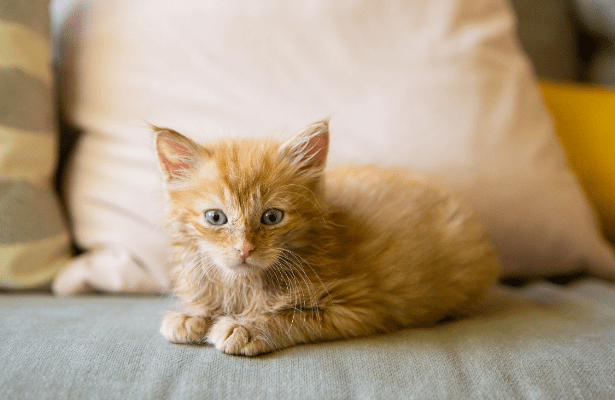
The first six weeks of a kitten’s life are crucial to its development. They will grow and develop rapidly, however they are susceptible to numerous threats. Once out of the womb, the kitten will need warmth, food, and protection from infectious diseases and parasites (such as fleas).
Probably at no other age will kittens grow at the extraordinary rate of this period and seeing the changes in their development from one week to the next is an incredible experience. Let’s start with week one and build from there.
Week 1: Small food processing factories
The newborn kitten weighs only a few grams and fits easily in the palm of your hand. His umbilical cord will fall off within two or three days, but his eyes and ear canals will not yet open.
Kittens are very helpless at this age, but the mother cat instinctively knows their needs. He feeds them, holds them close to warm them and cleans them with his rough tongue, which also stimulates their digestion and helps them urinate and defecate. Mother cats are very protective of their kittens and will move them to another location if people enter the litter box too much.
Leer mas Japanese Chin (Japanese Spaniel): characteristics of the dog breed
Provided the mother is vaccinated or has natural immunity, the kittens will receive the same immunity in the first 24 to 48 hours through colostrum and will last until they are old enough to receive the vaccines.
Newborns weigh an average of 100 g at birth and can double their weight by the end of the first week. It’s a good idea to weigh them and monitor their weight to see if they’re getting adequate nutrition. At this point they are simply small food processing factories and their only activities are grooming, sleeping and waste disposal. There is very little social interaction at this age other than competition for their favorite nipple where they will nurse while kneading with their little paws.
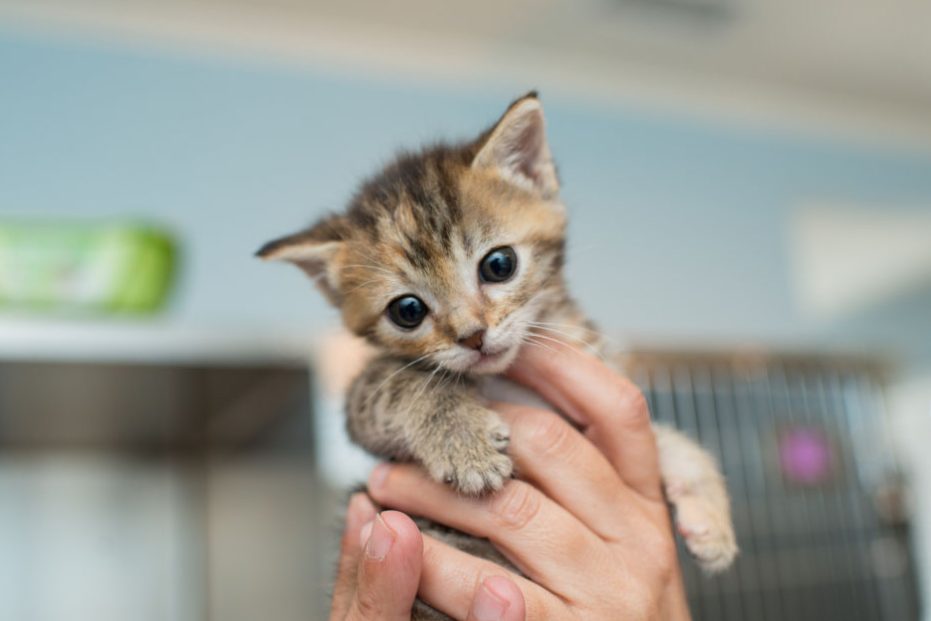
The general rule of thumb for how much to feed young cats is 8ml of formula per 28-30g of body weight per day. You will gradually increase the amount of formula for each feeding and decrease the number of feedings.
Leer mas How to stop meowing loudly in cats
Week 2: Grow and develop
Your kitten continues to grow at an astonishing rate, at least 10 grams per day. The mother cat should be fed quality cat food to help her replenish the nutrients she loses during breastfeeding. Subsequently, the kittens will be introduced to the same food.
His eyes will begin to open and be fully open between 9 and 14 days of age. All kittens’ eyes are blue and will remain so for several weeks. At first their vision will be blurry and their pupils do not dilate and contract easily, so they should be kept away from bright lights.
See also: The best brushes for cats
Week 3: Awareness develops
Their ear canals will be fully open and their sense of hearing is still developing. However, kittens can become frightened if they hear loud sounds. Their ears may be fully erect at this age.
Leer mas Saint Bernard: characteristics of the dog breed
Their eye color may begin to change from the blue common to all kittens to the shade they will be as adults. Their sense of smell will be well developed. Kittens can now eliminate voluntarily as their digestive system develops. The mother cat will continue to groom them until they learn grooming skills.
Don’t be surprised if kittens start purring at such an early age. Now the milk teeth will begin to appear and the mother cat will begin to think about weaning.
Week 4: Stands up and wobbles
Kittens will begin to sit between the third and fourth week and will try to walk, although their first movements will be very shaky. Their bodies are disproportionate to their eventual adult status. Their little tails are very short and rod-like, and their heads are disproportionately large compared to their bodies and legs. That will all change, however, when they start to move.
Don’t be surprised to see kittens escape from their nesting area as they try to expand their horizons. They will also interact more with their littermates, even to the point of forming «alliances,» which may or may not be gender-based.
Leer mas How to restrain your dog in the car safely
The kittens will continue to nurse regularly. It is important to continue feeding the mother good quality food while she is nursing the kittens.
See also: Best premium dry cat food
Week 5: Beginning of the weaning process
At this point the kittens will roam free and start playing with their siblings
They will develop a new sense of independence, although they may not move away from their mother or siblings. This will be a great time to socialize with people.
Cats can now be introduced to canned food. Select a quality brand of cat food with a named meat source as the first ingredient (chicken is good). Ideally, they should be fed the same kitten food given to the mother cat, as the kittens will quickly learn and eat their mother’s food. Use a shallow dish and expect their first experiences to be messy.
Even if the mother cat tries to wean the kittens, they will still need nursing experience to satisfy their sucking needs, at least until 8 or 10 weeks of age, by which time the mother cat will have gradually weaned them.
Now kittens can also learn the basics of litter box. They need a separate, smaller, easy-to-access box with only an inch or two of sand. For starters, a slightly tall plastic box or shoebox lid might work.
Just as human babies experiment with tasting everything, so do kittens. Avoid ingesting harmful substances by using natural litter such as corn cobs, paper or wood shavings – never use clay.
See also: The best interactive toys for cats
Week 6: Socializing in full swing
Social skills continue and there is no doubt that these are lively and active cats who will become adult cats too soon. They can run, jump and climb, and can entertain themselves and their human observers endlessly. They can fall asleep just as quickly (breeding is hard work!), so be careful not to let them get tired.
Kittens will follow their mother’s lead in socializing with people. If she has a comfortable relationship with the people in her life, her kitties will too. However, if the kittens are not used to human handling for six weeks, it can be a long, slow process to train them afterwards, and such a cat can never be a «lap cat».
Fundamental aspects
Kittens should learn at this age that hands are not for playing: hands are for grasping, petting and feeding. One of the best «toys» for teaching this lesson is the plastic straw. You can drag it across the floor and watch the kitten run towards it, then shake it a little and allow it to pounce on it and «catch» it. The kitten can be proud of his treat before sitting down to bite it. Be sure to supervise your kitten while he uses the straw, because you don’t want him to ingest plastic.
It was almost time to go home
Well-socialized, fully weaned puppies may be ready for their new forever homes in just a few weeks. If you’ve been waiting for the kittens to be old enough to adopt, you’re probably pretty excited by now.
Patience though. Remember, «all good things are worth waiting for,» and under ideal circumstances, kittens are not ready for adoption until they are between 7 and 9 weeks old.
Read also: The best cat beds
latest posts published

Belgian Malinois: characteristics of the dog breed

Norwegian Buhund: characteristics of the dog breed
Caring for the Chinese Water Dragon

The best brushes for cats

How to choose the best chew toys and treats for your dog

How to train your puppy to walk on a leash

Czech Terrier (Cesky Terrier): characteristics of the dog breed

Pembroke Welsh Corgi: characteristics of the dog breed

The best bags for carrying cats