Kittens go through many changes soon after birth. The first few weeks of their lives are full of new sights and sounds, and by the time they reach six weeks, they are almost ready to leave their mother. But that doesn’t mean that development, change and learning stop. Between six and twelve weeks of age, there are still important milestones a kitten must pass.
Physical development
At six weeks of age, a kitten’s baby teeth will begin to erupt. Over the next two weeks, all baby teeth should break through the gums and the mother cat may be reluctant to breastfeed for this reason. At 12 weeks of age, these baby teeth will begin to fall out.
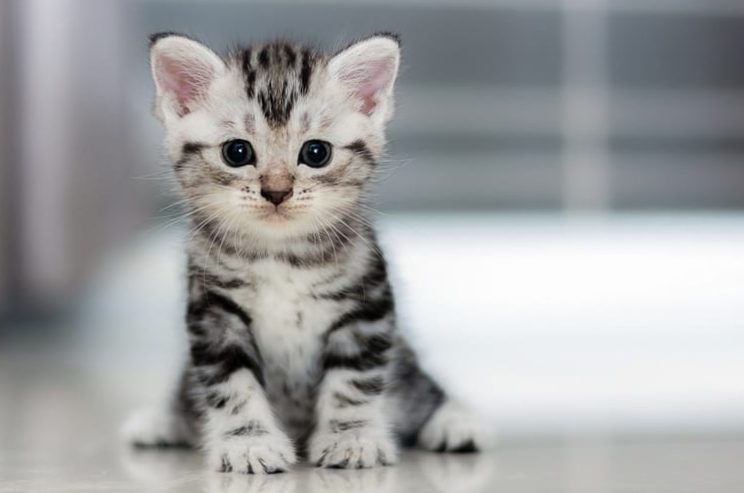
A kitten’s eyes and ears opened a few weeks ago, but at six weeks of age the eyes will still be blue. Hearing and vision are fully developed and over the next few weeks the eye color will slowly change to the final adult eye color.
 How to take care of a pregnant cat
At around six weeks of age, a kitten will need extra heat to maintain its temperature. Once he is about a month and a half old, he will no longer need a space heater, heat lamp, or other heat sources he used to rely on. As long as the kitten is in an environment with the appropriate room temperature, it will be fine because it will be able to self-regulate its body temperature.
If you have a male kitten, his testicles will droop and be palpable at about seven to eight weeks of age.
Behavioral changes
Between 6 and 12 weeks, the kitten is very active and sociable. He won’t sleep as much as a newborn, but he will spend more than half the day sleeping. A kitten will begin to play with its littermates, explore its surroundings, and its personality will begin to develop.
This time is extremely important for developing your kitten’s social skills. If a kitten doesn’t have the opportunity to learn right from wrong through play and discipline from its mother and peers, it may struggle as an adult.
Leer mas Bichon Frize: characteristics of the dog breed
Social skills may suffer in kittens who have not been properly socialized or they may even develop aggression problems.
See also: The best canned products for cats
Health and care
At approximately eight weeks of age, a kitten should undergo a veterinary check and receive its first FVRCP vaccine. The FVRCP vaccine contains three different vaccinations in one. FVRCP includes rhinotracheitis virus (FVR/FHV-1); Calicivirosis (FCV); Feline panleukopenia (FPV).
These are the main diseases that cats of any age can contract. This vaccine will need to be repeated or supplemented with a booster at approximately 12 weeks of age and again at approximately 16 weeks of age.
Leer mas 8 common dog paw problems
Some veterinarians will spay or neuter a kitten between 8 and 12 weeks of age, while others wait until the pet reaches a minimum weight for this procedure or recommend that cats be older than six months before surgery.
This procedure should be discussed with your vet and a pre-operative blood test is often recommended to ensure the kitten is healthy enough for anesthesia. This blood test will also establish a baseline for future blood tests as your kitten ages, so you’ll have something to compare it to.
Heartworm and flea treatment should also be discussed with your vet. Not all products are safe for small or young cats, but these parasites can be deadly, especially to a kitten. If you see fleas on your kitten, you can wash him with dish soap, but you should avoid flea shampoos.
Food and nutrition
A six-week-old kitten should be weaning to stop nursing. A high-quality canned cat food should be mixed with water initially until the kitten is able to eat the canned food without adding water. Then the kitten will switch to dry food once he is comfortable eating canned food and has baby teeth. By 8 to 10 weeks of age, a kitten should be fully weaned from its mother. At this age it is not necessary to limit the amount of food a kitten eats.
Leer mas Kitten development in the first six weeks of life
Kitten training
Litter box training will come naturally to a kitten if it sees its mother or siblings using the litter box. Covering waste after urinating or defecating is something cats do instinctively.
Teaching the kitten its name can be done at around eight weeks of age through repetition and reward. Verbal praise, petting, toys and treats are all forms of rewards that your kitten will respond to.
Read also: The best cat litter
latest posts published

Belgian Malinois: characteristics of the dog breed

Norwegian Buhund: characteristics of the dog breed
Caring for the Chinese Water Dragon

The best brushes for cats

How to choose the best chew toys and treats for your dog

How to train your puppy to walk on a leash

Czech Terrier (Cesky Terrier): characteristics of the dog breed

Pembroke Welsh Corgi: characteristics of the dog breed

The best bags for carrying cats