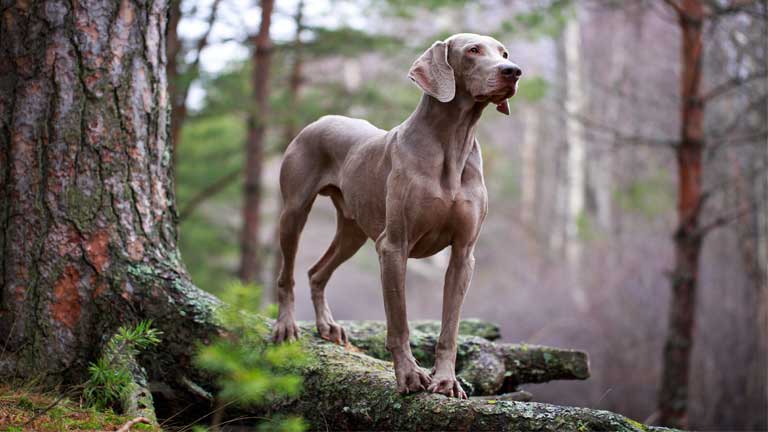
History and origins The Weimaraner is a German dog breed recognized by the FCI. Today it is no longer possible to trace the exact origin, but it is certain that at the beginning of the 19th century the Weimaraner was bred and kept as a hunting dog in and around Weimar. Among other things, the then Grand Duke of the Weimar court used the animals for hunting purposes. Planned breeding according to uniform standards began in 1890. In 1897, the association for the breeding of the silver-gray Weimaraner was founded, which is still known today under the name «Weimaraner Klub e. V.» is active.
I wait
The Weimaraner is a hunting dog up to 70 cm tall and weighing up to 40 kg with silver-gray, deer or mouse fur. Female dogs are slightly smaller and lighter than male dogs.
He is muscular, well-proportioned and graceful. The ears are large and set high, typical of hunting dogs, and the eyes are amber. Weimaraners are now bred for both short and long hair, although the latter are relatively rare.
Character and essence
The Weimaraner is a hunting dog with a strong focus on predatory game and predators: on command it tracks down game or rabbits, kills them and retrieves them. Its hunting instinct is intentional and must be taken into consideration before purchasing. The Weimaraner is very intelligent and alert, but also stubborn and strong-willed. It is not easy to train and therefore not suitable for beginners.
Leer mas Profile of the Siberian Husky
It usually bonds closely with only one person and is extremely loyal and affectionate towards them. He is quite wary of strangers: his strong protective instinct makes him not hesitate to defend his family or his territory from perceived dangers.
Is a Weimaraner right for me? How should it be held?
taken
The Weimaraner needs a lot of activity and exercise. Leisurely walks are not enough. He wants to hunt because that’s exactly what he was bred to do. If he is not allowed to do this, he needs other opportunities to exercise his energy and follow his instincts, e.g. B. Training with mantrailing or dummy. It places high demands on its owner and therefore belongs only in experienced hands.
Nutrition
The Weimaraner has no specific dietary needs. To prevent misalignments of the musculoskeletal system, it is important to ensure healthy and uniform growth during puppyhood. A food that is too rich in protein can make puppies grow too quickly and therefore promote joint problems. In our article “Which dog food is best?” Find out how to recognize high-quality dog food.
Leer mas Profile of Hemigrammus erythrozonus
Education
The Weimaraner is a hunting dog with corresponding drives and behaviors. His strong protective and hunting instincts and his great intelligence mean that his education is certainly a challenge. A lot of consistency, assertiveness and composure are needed. However, harshness and coarseness are out of place. If the Weimaraner trusts its owner’s leadership skills, it is very obedient.
Treatment
The Weimaraner is relatively easy to care for. For short-haired Weimaraners, it is sufficient to carefully brush the coat once or twice a week, especially during moulting. Of course, long-haired dogs require a little more care. Since Weimaraners are prone to ear infections, it is a good idea to check and clean their ears regularly.
Typical diseases
Basically, Weimaraners are extremely robust dogs, mainly due to the strict breeding criteria. When purchasing it is always a good idea to check the seriousness of the breeder! Despite genetic selection procedures, the Weimaraner can also suffer from various diseases typical of the breed, including: B. In addition to the predisposition to ear infections, there is also gastric torsion, which can especially affect large breed dogs.
Hip dysplasia (HD): Being a large dog, a Weimaraner can be affected by hip dysplasia. This is a painful misalignment or narrowing of the hip joint, leading to limited mobility. Furry friends with HD often exhibit an unsteady gait or reluctance to move. A clicking or creaking sound in the affected joint may also be an indication of HD. Unfortunately, the disease cannot be cured, but there are several therapeutic approaches that can relieve the pain. For a dog with hip dysplasia, it is also important to reduce movements that put wear on the joints, such as jumping on hard surfaces, climbing stairs, or jumping in and out of the trunk.
Leer mas Dog breeds that bark little: only Russel
Entropy: An entropion (also called a floating eyelid) is a mostly congenital misalignment of the eyelid in which the eyelid rolls inward, so that the eyelashes constantly rub against the eye. As a result, the eye begins to water and become red. If entropion is left untreated, it can lead to conjunctivitis or corneal damage. If the rolling eyelid occurs repeatedly and causes unpleasant symptoms for the affected hairy nose, surgical correction is often the only solution to permanently ensure a normal position of the eyelid.
Epilepsy: 2% of all dogs suffer from epilepsy – this means that epilepsy is one of the most common central nervous system diseases in dogs. During an epileptic seizure, due to a recurrent malfunction of the brain, an imbalance occurs between the electrical charge and discharge of nerve cells, so that entire groups of neurons begin to emit electric shocks in an uncontrolled manner. The dog stiffens, stiffens and falls to the side. During the seizure, the affected animal is unresponsive or perhaps even unconscious. After a short time everything ends, but it is possible that the four-legged friend remains exhausted, disoriented, hungry and thirsty for a longer period of time. Genetic epilepsy cannot be cured, but it can be treated consistently with medications.
Frequently asked questions about the Weimaraner
When can you have a Weimaraner neutered?
Castration is possible after reaching sexual maturity.
When does a Weimaraner become fully adult?
Weimaraners are fully grown around two years of age.
Leer mas Wavy budgie profile
When does the breed become sexually mature?
Weimaraners become sexually mature between five and eleven months.
Are there any peculiarities in meeting other dogs?
Weimaraners should be well socialized as puppies, e.g. B. regularly meet other dogs in puppy groups to prevent any problems that may arise later.
The Weimaraner as a family dog – is it possible?
While some insist that the Weimaraner belongs exclusively in the hands of professional hunters, others argue that it can also be kept as a family dog if given adequate exercise. Whatever you think, the fact is that the Weimaraner is not a dog that can be kept «casually». It belongs to expert hands and must be challenged and exercised both physically and mentally. If he is not allowed to realize his hunting ambitions, he must be offered alternatives, e.g. For example. mantrailing, training with dummies or tracking. The Weimaraner is therefore not a typical family dog that adapts easily and is sometimes content with less exercise and activity. Another thing not to be overlooked is that the Weimaraner usually bonds very closely to a single person. It therefore happens that the other members of the family are at best «tolerated». This means that the Weimaraner is only very suitable as a family dog to a limited extent.
Doubtful breeding
The Weimaraner Club e. V., the umbrella organization of most breeders in Germany, follows a strict surrender policy: puppies are only handed over to hunters who are able to do justice to the Weimaraner’s demanding nature. Since the Weimaraner has found numerous lovers due to its appearance, a kind of «parallel breeding» has developed in recent years. Caution is advised in this case, because these breeds are not subject to any control: often the parents are paired without breeding tests and temperament tests and the puppies are given to people without first clarifying whether they are aware of the demanding nature of the dogs and can deal with it. Unfortunately, dubious breeding also means that diseases (especially heart and joint diseases) and behavioral problems such as nervousness or aggression grow among dogs. It is therefore essential to purchase Weimaraners only from a reputable breeder.
latest posts published

Belgian Malinois: characteristics of the dog breed

Norwegian Buhund: characteristics of the dog breed
Caring for the Chinese Water Dragon

The best brushes for cats
How to choose the best chew toys and treats for your dog
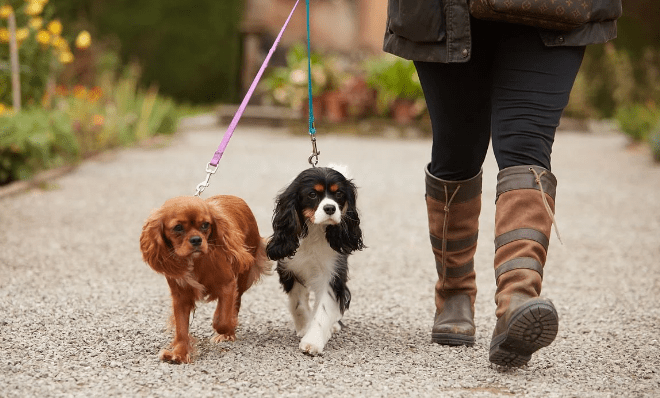
How to train your puppy to walk on a leash

Czech Terrier (Cesky Terrier): characteristics of the dog breed

Pembroke Welsh Corgi: characteristics of the dog breed

The best bags for carrying cats