When we talk about how well we can smell, dogs are certainly much better than us. Therefore, it’s not surprising that our canine companions frequently use their noses to perform crucial and sometimes life-saving jobs, from acting as military dogs that can detect bombs or weapons, to being trained as guide dogs that can warn their epileptic owner before a seizure or a diabetic when their blood sugar decreases too much. Here are some unexpected facts about a dog’s sense of smell.
Why you should let your dog sniff on walks
I can smell human emotions
We already know that all dogs can smell a treat — or dinner — from miles away, but research suggests that a dog’s sense of smell can pick up on much more than food (or wildlife, or trash, or your child’s dirty socks).
A dog’s nose can also detect fear or even sadness, as our canine colleagues can pick up the scent of adrenaline, also known as the «fight or flight» hormone. When it comes to the «smell of fear,» an increase in heart rate and blood flow sends distinctive body chemicals to the surface of our skin, which a dog can detect almost immediately.
That’s why we often rely on our four-legged best friend as a service or emotional support animal, as he can be trained to «sniff» anxiety attacks or other adverse events in humans. Some dogs are known to «smell» diseases, including cancer, because they leave specific scent traces in the human body and in bodily secretions such as sweat, breath, or urine.
Leer mas How to Train Your Dog – Animal Kingdom
See also: The best dog toys
Your dog thinks you (and your friends) smell
Even though most people shower regularly and try to cover natural body odors with products like deodorants and perfumes, you can’t hide your dog’s unique odor. And yes, that’s exactly why many dogs will greet you (or, more embarrassingly, friends or relatives) with their nose directly in the groin region, which is rich in apocrine sweat glands that produce pheromones, which convey important social information to your dog.

There’s also a good reason why dogs sniff
It can also be an embarrassing situation when you are walking your dog and he stops to sniff another dog’s genitals or back. But for your dog, it’s completely acceptable, and for good reason. When dogs smell each other, they discover important details about their new friend, as a dog’s sense of smell can determine information from what its new canine companion last ate to an estimate of its age.
Leer mas How to Avoid Losing Your Puppy: Proper Pet Identification
And in this regard, when dogs «mark» the entire neighborhood, they are actually communicating with other dogs. So sniffing the trees (and then promptly marking them, like a business card) is actually the dog’s way of keeping up with neighborhood gossip.
Your dog’s breed can determine how strong his sense of smell is
While every dog has millions of smell sensors hidden deep in their noses, not all dogs are equal when it comes to their ability to smell, and it doesn’t always relate to their type. For instance, dachshunds possess about 125 million smell sensors, whereas greyhounds have more than twice that, having around 300 million smell sensors; this is also why they are often chosen for tracking tasks.
Breeds like the German shepherd (a common choice for service dogs) are in the middle range, with about 225 million. Just to clarify how remarkable these figures are, in comparison, a person’s nose has only five million smell sensors.
A dog’s nostril is a complex machine
We know that all dogs (and animals in general) have a stronger sense of smell than humans because their noses are structured differently. But dogs also have different breathing methods than ours; for example, each nostril of a dog contains separate holes for inhaling and exhaling, and they also work independently (meaning they can pick up a range of odors coming from different directions).
Leer mas How to deal with guilt after putting a pet down
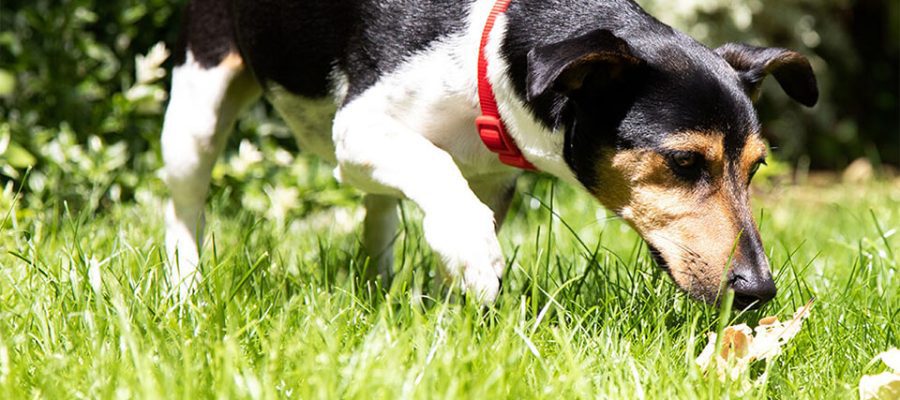
Additionally, humans don’t tend to walk with their noses to the ground, and dogs will thoroughly investigate every scent they encounter with numerous sniffs (in fact, a dog can sniff at least five to six times per second).
Read also: The best cameras for pets
latest posts published

Belgian Malinois: characteristics of the dog breed

Norwegian Buhund: characteristics of the dog breed
Caring for the Chinese Water Dragon

The best brushes for cats
How to choose the best chew toys and treats for your dog
How to train your puppy to walk on a leash

Czech Terrier (Cesky Terrier): characteristics of the dog breed

Pembroke Welsh Corgi: characteristics of the dog breed

The best bags for carrying cats