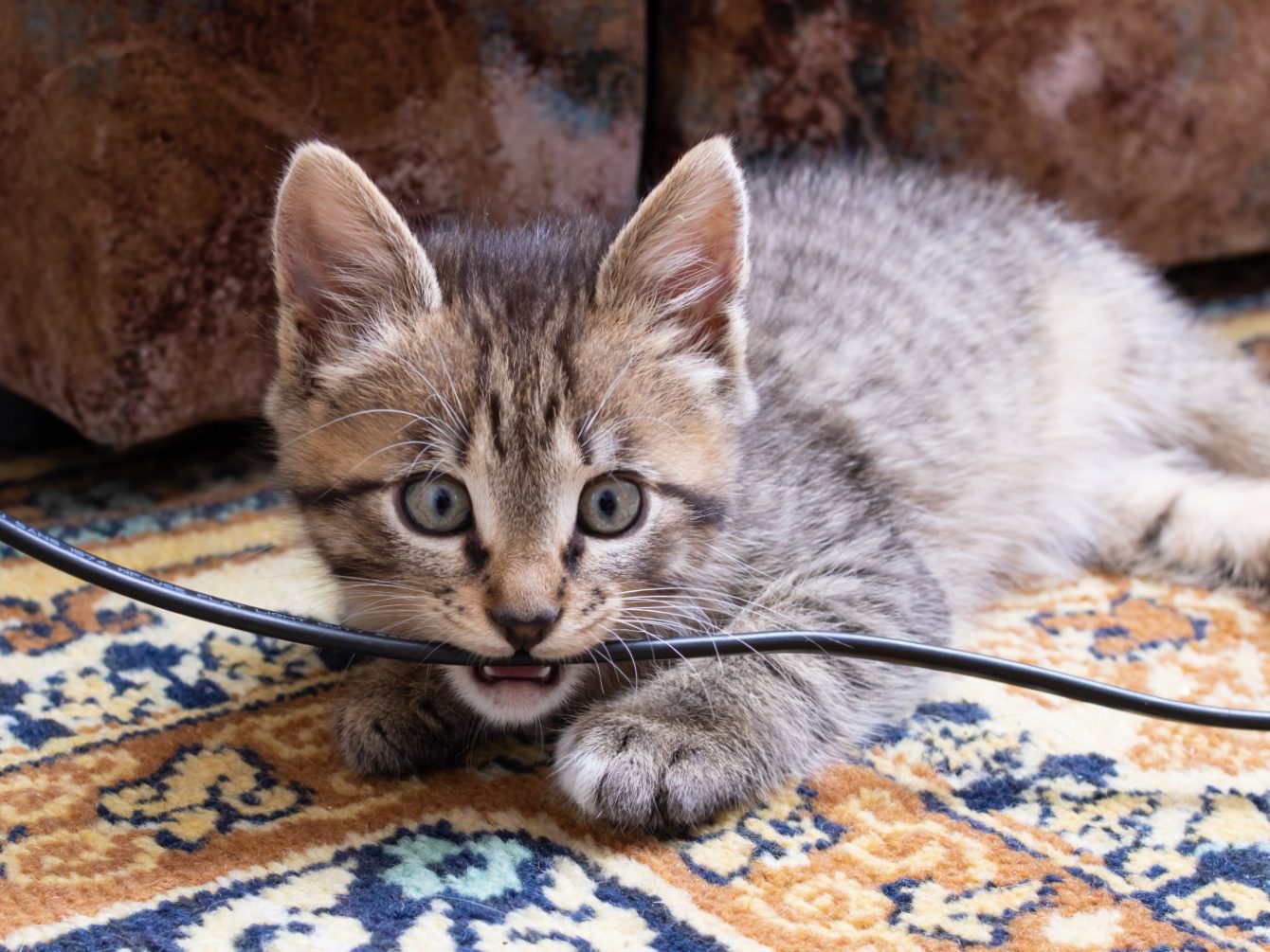
When cats chew inanimate objects such as electrical cords, the behavior may be caused by obsessive-compulsive disorder (OCD) or other environmental or health factors.
For example, it could be a dental problem, a way for the cat to relieve stress, or the cat simply confused that object with something else.
Whatever the reason for this behavior, it is dangerous for cats to chew on electrical cords, not to mention that this activity can destroy your appliances or at least force you to replace the cords.
Luckily for you and your cat, there are several ways to address this behavior.
Leer mas Australian Shepherd (Aussie): characteristics of the dog breed
Possible reasons for chewing
It’s a mystery why cats choose to gnaw on electrical cords.
One theory is that the string resembles an animal’s tail and that basic feline instinct compels the cat to attack anything that appears to be a tail, although this reasoning does not explain why the cat continues to gnaw on the string once it discovers that there is no animal attached.
Other possible reasons for chewing on electrical wires could be:
Obsessive-compulsive disorder
 What you need to know before choosing a bird as a pet
Obsessive-compulsive disorder (OCD) involves behavioral problems such as chewing and purring and most often develops in cats with Eastern ancestry such as Siamese, Burmese and Oriental cats. These felines can develop a strong desire to chew, suck and sometimes even eat inedible objects.
Although electrical cord chewing may be the first OCD-specific behavior you notice in your cat, you may notice other symptoms later. There appears to be no explanation for why some cats develop a particular combination of OCD symptoms.
- Self-mutilation, particularly that involving tail wagging and repeated tail wagging, is one of the early symptoms of OCD.
- Excessive grooming, when a cat grooms and chews its fur so vigorously that it starts to go bald in places, is also a common symptom.
- Obsessively sucking, licking, or chewing on tissue can also be a symptom. This behavior is not well understood and several causes have been suggested, including premature removal of the kitten from the mother. If your cat has Siamese-like tendencies, chewing may be influenced by genetics.
- Feline hyperesthesia can also affect cats with OCD. A cat with this condition may exhibit symptoms such as skin tightening and self-mutilation behavior.
Dental problems
Cats with mouth pain caused by dental problems may develop chewing behavior in an attempt to relieve the discomfort.
Up to 70% of cats suffer from periodontal disease by age 3, so it’s important to address it proactively with regular veterinary dental care, including checkups and cleanings.
Leer mas The best canned products for cats
Boredom or lack of activity
If your cat is older, he may have a combination of problems that promote chewing behavior. As they age, almost all cats develop some degree of arthritis, which can lead to a dramatic reduction in their activity level.
When a cat is unable to move and exercise, explore, or interact with the world, the resulting boredom and stress can cause him to seek other outlets for entertainment.
Medical problems
Metabolic problems such as hyperthyroidism can also occur in old age, increasing the cat’s activity level and increasing its desire to gnaw. A blood test can reveal this treatable problem that addresses chewing behavior.
Pica
In rare cases, a nutritional deficiency called Pica is associated with the consumption of strange materials. It is hypothesized that the cat instinctively understands that a nutrient is missing from its diet and tries to replace it, but chooses inappropriate objects to ingest. Some cats suddenly start targeting inedible objects and are anemic.
Leer mas Baby cat: characteristics of the cat breed
Stress
Stress can cause a wide range of strange behaviors. In these cases, chewing serves to calm anxiety and simply make the cat feel better on an emotional level.
How to stop this behavior
Take your cat to the vet for a checkup if inappropriate chewing behavior occurs so that any underlying health problems can be discovered. In the meantime, take steps to keep your cat safe.
- It is possible to cover electrical cables with PVC pipes. You can also make the wires less appetizing by painting them with hot sauce or a commercial substance designed to repel cats.
- Clean the cord with a substance that contains menthol, such as Vicks VapoRub, to keep your cat under control as the odor can be quite unpleasant. The Ssscat motion detector, which «hisss» if the kitten approaches, can also be an effective deterrent.
- Give your cat alternatives to chew, such as cardboard. Some cats also like leather chew toys designed for small dogs – soak them in water and pop them in the microwave to soften them up a bit.
- Add dietary fiber to your cat’s diet as it encourages some cats to reduce or even stop chewing altogether. Fresh cat vegetables, green beans or lettuce added to the cat’s food bowl can be good supplements. Some commercial «hairball» foods may also work because they contain a high amount of fiber.
- Reduces anxiety to help eliminate the urge to chew. Consider trying synthetic cat pheromones to relieve stress and calm your cat. If not, make sure your cat’s litter box is clean and contains enough toys and play time to keep him from getting bored.
Read also: The best automatic cat litter boxes
latest posts published

Belgian Malinois: characteristics of the dog breed

Norwegian Buhund: characteristics of the dog breed
Caring for the Chinese Water Dragon

The best brushes for cats

How to choose the best chew toys and treats for your dog

How to train your puppy to walk on a leash

Czech Terrier (Cesky Terrier): characteristics of the dog breed

Pembroke Welsh Corgi: characteristics of the dog breed

The best bags for carrying cats