
The arrival of your cat’s kittens is an exciting event. It’s a unique and special moment for both you and your feline companion as new lives are about to enter the world. But how can you confirm that your cat is indeed pregnant, how does the birthing process unfold, and what should you do once the kittens are born? Keep reading to discover all the answers right here!
Your cat is pregnant and you suspect she will give birth soon. If you notice these signs, labor will likely begin within 24 hours:
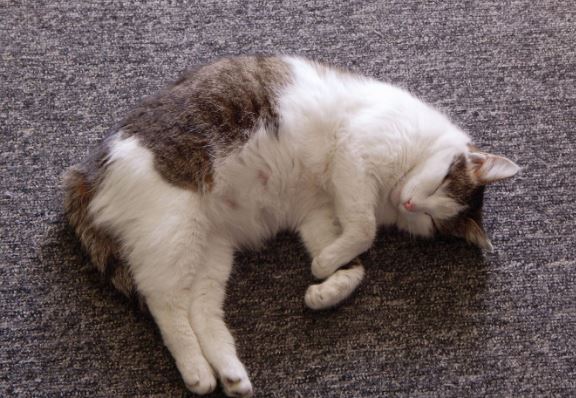
- Your cat meows a lot.
- Your cat is panting and scratching.
- Your cat suddenly doesn’t want to eat anymore.
- Your cat has clear, slimy discharge.
- Your cat has heavier stools, which may be a little sparse.
- Your cat walks around restlessly, as if looking for something.
- Your cat’s abdominal muscles contract – these are contractions.
The birth process of your cat
Once your cat is ready to give birth, she will settle into a comfortable place. Then prepare a large box with blankets and pillows. However, let your cat choose its safe place, so don’t put it in the prepared box. The birth will then begin in the chosen safe place and can last up to 12 hours.
Leer mas Does your dog always run away?
Birth itself occurs in 4 phases:
- Preparatory phase: The cat is preparing to give birth to her kittens.
- Opening phase: The cervix relaxes.
- Expulsion phase: The actual birth.
- Postpartum phase: The expulsion of the placentas.
The last two steps are repeated for each kitten. We’ll go into more detail below:
The expulsion phase
- Kittens are born in the head or rear position. If your cat is breech, giving birth may be a little more difficult, especially with her first kitten. The first kitten often takes longer because the birth canal still needs to be cleared.
- Kittens are born with intact or ruptured amniotic sacs. If the amniotic sacs are still intact, your cat will try to bite them open and the kittens will move to break the sac. If the problem persists, carefully open the bladder and dry the kitten’s mouth.
- After removing the bubbles, your cat will lick the kittens clean. This aids breathing. Doesn’t your cat do this? Gently rub the kitten with a towel and then let your cat smell it.
The postpartum phase
After the kitten is born, the placenta is expelled. Often your cat will eat it itself and bite the umbilical cord. If your cat doesn’t do it on its own, tear the umbilical cord. Be careful not to cut them, but rather tear them with your thumb and forefinger. The umbilical cord should not be more than 1.5-2 cm long, otherwise the kittens could get entangled in it.
If your cat more than Give birth to 2 kittens, let them eat a maximum of 2 placentas. Otherwise he may have diarrhea.
Leer mas Beware of these plants that are poisonous to dogs
Watch out for: Deviations at birth
If any of the following situations occur, you should do so Contact your vet. These signs point to one abnormal course of childbirth to your cat:
- Your cat has been pressing hard and frequently with no results for 30 minutes (45 minutes for the first kitten).
- A kitten partially protrudes from the vulva and no progress is noted in pushing.
- Your cat has been pushing weakly for 1 hour and there is no progress (are there still kittens in the uterus?).
- Your cat is showing symptoms of illness.
- Abnormal secretions (smelly, dark) are present.
How much time passes between the birth of each kitten?
Between births they last approximately 10 to 60 minutes. Especially with larger litters, it may take a little longer for the next kitten to be born. It’s also completely normal for your cat to fall asleep between births.
After-sales support after the birth of your kittens
Your cat will stay still after giving birth to her kittens I’ve had discharge from my vulva for a few days. It is initially red/greenish-red and odorless. After 5 days the secretions become lighter and clearer. Overall, the exhaust can take up to about 10 days. We also give 3 tips for taking care of your kittens and your cat after birth:
1. Encourage your kittens to drink breast milk after birth
As soon as a few kittens are born, place them on your cat’s teats. Why?
Leer mas Does your cat have any offspring: only Russel
- This strengthens the feeling of being a mother.
- Cat milk contains many antibodies to defend against bacteria and viruses.
- Breast milk contains a lot of energy to keep kittens active and growing well.
However, make sure that your cat’s nipples are large enough and that the milk definitely comes out.
2. Keep your kittens warm, but not too warm, after birth
Die The most common cause of death in newborn kittens is too low a body temperature. But too much heat is also not good for your kittens.
- Place a hot water bottle filled with warm (but not too hot) water near your kittens.
- In the first week the room temperature for them should be around 32°C.
- You can then slowly lower the temperature as the kittens will be able to regulate their temperature better.
3. Give your cat high-energy food
After giving birth to kittens, feed your cat high-energy foods at several meals a day. Why? Because childbirth is tiring and demands a lot from a cat’s body. It will put those extra vitamins, minerals and calories to good use to help her recover.
Also, always keep a large bowl of fresh drinking water available. Your cat needs a lot of water to produce milk for her kittens.
Leer mas Make your room bird-proof
latest posts published

Belgian Malinois: characteristics of the dog breed

Norwegian Buhund: characteristics of the dog breed
Caring for the Chinese Water Dragon

The best brushes for cats

How to choose the best chew toys and treats for your dog

How to train your puppy to walk on a leash

Czech Terrier (Cesky Terrier): characteristics of the dog breed

Pembroke Welsh Corgi: characteristics of the dog breed

The best bags for carrying cats