
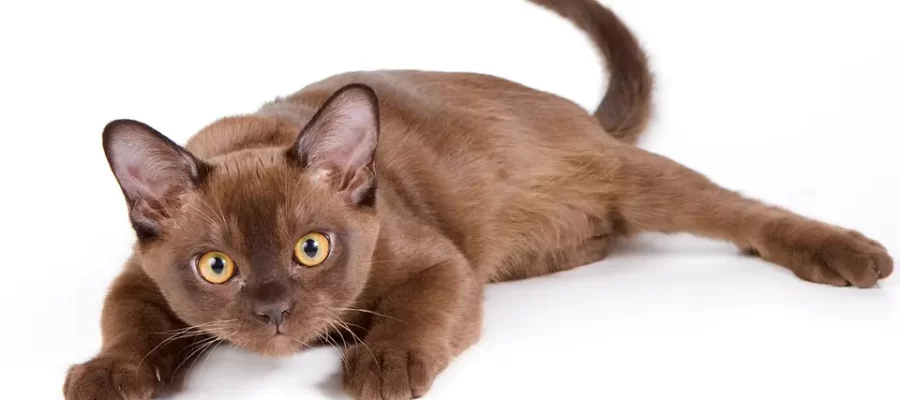
Burmese cats are medium-sized cats with a strong, muscular body, round head and expressive golden eyes. These affectionate, intelligent and loving cats were proposed to the CFA as a new breed in 1934 and were accepted and registered in 1936.
Breed overview
Weight: 3-6 kilograms
Length: approximately 46cm, from head to tail
Fur Length: Shorten
Leer mas Separation anxiety. A problem of dogs adopted in the pandemic
Fur color: Sand black, champagne, platinum and gray-blue (many organizations recognize a wide range of colors)
Eye Color: Green or gold
Life expectancy: 16-18 years
Characteristics of the Burmese cat
Affection level: Mare
Leer mas How to Teach Your Puppy the “Go Away!” Command
Courtesy: Mare
Child-friendly attitude: Mare
Friendly attitude towards other animals: Mare
Movement requirement: Mare
Leer mas How to train your dog to run next to the bicycle
Playfulness: Mare
Energy level: Mare
Intelligence: Mare
Sound trend: environment
Leer mas The best dog treats, snacks and treats
Level of hair loss: microphone
History of the Burmese cat
In Myanmar (ancient Burma), legend has it that cats of this breed were considered sacred and were celebrated in temples and monasteries. These were discovered in England in the late 1800s, but were not as popular as Siamese.
Burmese and European Burmese are the two types of this breed recognized by the CFA. The Board of Cat Fancy, which sets standards for cats in the United Kingdom, recognized the Burmese in 1952. The International Cat Association, the organization considered the largest genetic registry for cats, accepted the breed in 1979.
According to the Board of Cat Fancy, the breed gradually disappeared in England and Europe. This breed was revived in 1930 using the first true Burmese.
The first Burmese cat
All sources agree that the «founding mother» of the Burmese breed was Wong Mau, a cat brought from Burma to America in 1930 by a sailor and given to Dr. Joseph G. Thompson of San Francisco. The Wong Mau was described as a chestnut brown cat with dark spots on the extremities, a more compact body than a Siamese and a shorter tail.
His unique appearance led Dr. Thompson to do a breeding program in which Wong Mau was paired with Tai Mau, a gray-tipped Siamese. Some kittens looked more like Siamese and others looked more like Burmese.
Wong Mau was then paired with a son and kittens of different colors were born, some brown, some dark brown. The dark brown kittens became the foundation of the Burmese breed.
A wartime sea voyage of three Burmese cats brought from Burma to America in the 1940s is said to have lasted five months, during which they survived bomber attacks.
According to the CFA, the breeding program demonstrated that these Burmese cats were a distinct breed. This prompted breeders to apply for breed recognition for the championship. Along the way, the other colors present in the Siamese breed were also observed in several generations. Over time, and after much controversy, these colors were accepted by the CFA.
Breed standards
The CFA recognizes four colors: sable black, a rich dark brown; champagne colour, a warm beige; platinum, a light gray with brown undertones; and blue-grey, a medium gray with brown undertones. Cats with black sable fur have brown nose skin and pads; Cats with champagne fur have light brown noses and light pink-brown paw pads.
Blue-gray cats have slate-gray nose skin and pinkish-blue pads. Platinum cats have lavender pink skin and nose pads.
The Cat Fancy Board recognizes 10 colors: brown, bluish gray, chocolate, lilac gray, reddish, cream, brown tortoiseshell, gray blue tortoiseshell, chocolate tortoiseshell and lilac gray tortoiseshell with complementary nose and paw colors.
In England in 1955 the first blue-grey Burmese cat was born, called Sealcoat Blue Surprise. Other similar colors appeared first but were neglected in favor of black cats.
According to the TICA (International Cat Association), Wong Mau is believed to have carried diluted chocolate genes, which resulted in chocolate, blue-gray and lilac-gray kittens. The factor that led to the reddish color was added later in Europe.
TICA recognizes a variety of colors: rich, dark sable brown; A medium, warm blue-gray; a warm chocolate beige with pink or brown undertones; a grey-lilac that ranges from grey-pink to silvery-platinum with pink hues; golden apricot red with melon-orange undertone; warm, rich cream shades with apricot red undertones; and the combination of reddish or cream with black sable, chocolate, blue-gray or lilac-grey, forming the tortoiseshell pattern.
Each association has specific standards for Burmese cats, with points assigned to different characteristics. In general, the cat’s head should be round and have full, round, wide-spaced eyes.
There should also be a visible break in the nose and the ears should be set wide apart. Eye color varies from yellow to gold for all coat colors and color intensity is preferred. The muscular and compact body, of medium size, should have proportional legs and rounded paws. The tail should be straight and of medium length.
Caring for the Burmese
Burmese cats have short, fine fur with a silky sheen. It requires minimal care and does not shed much. Brushing your cat once a week with a rubber brush should be enough to remove loose hair and keep the coat shiny.
It’s also important to keep your cat active. Burmese are playful, energetic cats and do best in active homes with families willing to play and interact with their pets. These cats are very easy to train.
The Burmese cat’s playful personality extends from childhood to adulthood. They are described as almost dog-like in their devotion to their humans.
They will follow you around the house, seek affection while you read or watch TV, and sleep in your bed at night. Females are more likely to take on the role of mistress of the house, while males prefer to watch over the house while sitting comfortably on their laps.
Burmese cats are compatible in homes with other pets and/or children. They are athletic, playful, and thrive in active homes. Burmese women have a soft voice and love to converse with their people.
These cats crave human attention and can become angry if left alone for long periods of time. Burmese dogs develop a strong attachment to their owners, and while it may take them a few weeks to adjust to their new home, these deep bonds develop relatively quickly.
Breeders put kittens up for adoption between the ages of 12 and 16 weeks and they should be neutered by 6 months of age, especially if they are sold as pets. Pet Burmese cats sell for less than competitive Burmese cats.

Health problems
Burmese cats are generally healthy, but can develop an inherited disease called hypokalemia, which causes skeletal muscle weakness. There is a simple DNA test to demonstrate feline hypokalemic polymyopathy (the full name of the disease). This condition is episodic in nature and may affect the entire animal or may be localized to the neck or limb muscles. As a result, affected cats tend to have difficulty walking and holding their heads up.
In addition to hypokalemia, these cats may also be prone to:
- Cranial deformities
- Glaucoma is characterized by increased intraocular pressure and can lead to blindness
- Feline hyperesthesia syndrome, which results in increased sensitivity to touch or painful stimuli
- Kidney stones caused by oxalate in the urinary tract
Responsible breeders test cats for these diseases and offer a health guarantee as part of the sale of their kittens. It is always advisable to purchase from a breeder who can provide a written health guarantee.
Diet and nutrition
To maintain their active lifestyle, these cats need a diet rich in protein and nutrients. It is best to discuss dietary options with your veterinarian to ensure all of your cat’s needs are met. Dry food high quality is useful for maintaining oral health and can also be supplemented with wet foodif you want it. To prevent your cat from becoming a picky eater, the National Burmese Breeders’ Alliance recommends switching brands from time to time. food of the cat, so that your feline friend does not get used to just one type.
Advantages of the breed
- Burmese cats are affectionate and loyal.
- Burmese are a breed with a high life expectancy.
- They get along well with other cats, dogs or older children.
- They are very active, energetic and easy to train.
Disadvantages of the breed
- Burmese people are at increased risk of hypokalemia, an inherited disease that affects the muscles.
- They can become depressed if left alone for long periods of time.
- Burmese cats tend to be demanding and bossy.
- Where you can adopt or buy a Burmese cat
Are you interested in learning about other cat breeds? If you like the Burmese, check out these breeds:
- The Siberian cat
- Manx cat
- Russian blue cat
- Toyger the cat
latest posts published

Belgian Malinois: characteristics of the dog breed

Norwegian Buhund: characteristics of the dog breed

Caring for the Chinese Water Dragon

The best brushes for cats

How to choose the best chew toys and treats for your dog

How to train your puppy to walk on a leash

Czech Terrier (Cesky Terrier): characteristics of the dog breed

Pembroke Welsh Corgi: characteristics of the dog breed

The best bags for carrying cats
