How to recognize and treat this common condition Dogs have a third eyelid, known as nictitating membrane. This eyelid is positioned diagonally in the inner corner of the eye. The eye is lubricated with a tear film, made up of water, oil and mucus.
Each eye has two glands, one just above the eye and the other located in the third eyelid. The third eyelid gland is believed to produce 30% of the total water in the tear film; therefore it is important to maintain the function of this gland. This article describes a condition that alters the function of the third eyelid gland, which can possibly cause a reduction in the tear film.
What is Cherry Eye?

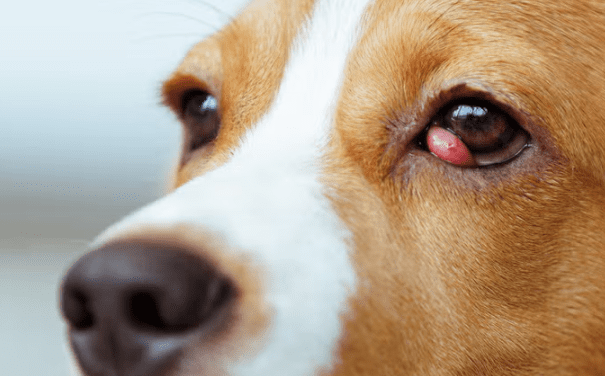
In your dog’s normal eye, you may occasionally see a small piece of the third eyelid. It may be visible when the pet is sleeping or waking up from a nap. Some owners may notice this after their pet has had surgery and is recovering from anesthesia. When the third eyelid gland thickens and slips out of place, you will notice a red, swollen mass near the lower eyelid. This leads to the term «Cherry Eye».
Leer mas Saint Bernard: characteristics of the dog breed
Cherry Eye is found in young dogs between the ages of six months and two years. The most common breeds affected are the Cocker Spaniel, Bulldog, Beagle, Greyhound, Lhasa Apso, Mastiff, Shih Tzu and other brachycephalic breeds. Cats are rarely affected, but have been reported in Burmese and Persian breeds. Unfortunately, Cherry Eye cannot be prevented. Knowing what signs to look for can help you diagnose and treat quickly.
Signs of Cherry Eye in Dogs
- Oval swelling protruding from the edge of the third eyelid
- It can occur in one or both eyes
- Epiphora (excessive tear production)
- Inflamed conjunctiva
- Blepharospasm (excessive squinting)
- Dry eye
A red bump protruding from the edge of the third eyelid is usually the first sign of a cherry eye. This can occur in one or both eyes. Some dogs may have no other symptoms.
Others may have increased tear production, inflamed conjunctiva (a clear mucous membrane covering the inner surface of the eyelid and the exposed surface of the eyeball), and excessive squinting. If reduced tear production occurs, dogs may experience dry eyes which can cause discomfort.
Warning
Leer mas How to restrain your dog in the car safely
If you notice your dog touching his eyes or rubbing his face against the floor or carpet, it means there is a problem and you should seek veterinary advice.
What causes cherry eye?
It is not entirely known what causes Cherry Eye. We know that the lacrimal gland of the third eyelid is held in place by tissue fibers. Some dogs have weaker fibers, so the gland sticks out. In smaller breeds, especially Boston Terriers, Cocker Spaniels, Bulldogs and Beagles, the third eyelid gland is not held firmly in place for genetic reasons. When the gland prolapses, blood does not circulate properly. This causes swelling and the gland may not produce tears normally.
What treatments are available?
When Cherry Eye is first diagnosed, your vet may recommend treatment with anti-inflammatory eye drops to help reduce swelling. Antibiotic eye medications may also be prescribed if there is associated discharge.
If Cherry Eye persists and causes discomfort, the next step will be surgery. The best treatment is to return the gland to its correct position. However, when this fails, the gland itself may need to be removed.
Leer mas What to do if your dog has a loose tooth
The most common operation is to make a single stitch, thus forcing the gland to remain in place. Complications are not common but can occur. The seam may not be anchored well enough to last permanently. This is the most common complication. So a second or perhaps even a third intervention of this type is possible. If this doesn’t work, another type of procedure will likely be needed.
The surface of the eye can become scratched if the spot comes off, causing pain to the dog. If this happens, the spot may be removed, but Cherry Eye may reappear.
Sometimes Cherry Eye is accompanied by other eyelid problems that make repair more difficult or less likely to be successful. In these cases, referral to a veterinary ophthalmologist may be necessary.
Another method used more recently is nesting. A piece of tissue is removed directly from the gland itself. This technique is riskier because it is often difficult to determine how much tissue to remove. Small dots are used to reduce space. Squeezing the edges of the incision pushes the gland back into place. The stitches eventually dissolve. Complications can occur, including:
Leer mas How to Train Your Dog the «Down» Command
- Swelling or swelling as the stitches dissolve.
- Inadequate narrowing of the tissue space can lead to recurrence of Cherry Eye.
- Failure to hold stitches and associated discomfort. Depending on the type of suture used, loose stitches can hurt the eye.
Sometimes both of the above methods are used to fix Cherry Eye. Your vet will determine which technique is best to use.
Removal of the third eyelid gland
Removal of the third eyelid gland has been the most popular remedy for Cherry Eye. Now, since we know the entire importance of this gland, to produce the tear film, this is not the preferred treatment.
If that gland is removed and the upper eyelid gland fails to produce adequate tears, you get a thick yellow discharge. If this happens, the eye develops a protective pigmented coating that blocks vision. This condition is called keratoconjunctivitis siccaor simply, dry eye. Dry eye usually requires lifelong medication. If left untreated, blindness can occur.
What can I expect after surgery?
Postoperative swelling is very common after Cherry Eye surgery. This should resolve itself in about a week. If the eye suddenly becomes painful or looks unusual, go to the vet again as soon as possible.
It’s not unusual for Cherry Eye to make a comeback. To avoid a prolonged recovery and complications, be sure to follow all postoperative instructions provided by your veterinarian.
Read also: The best food with natural ingredients for dogs
latest posts published

Belgian Malinois: characteristics of the dog breed

Norwegian Buhund: characteristics of the dog breed
Caring for the Chinese Water Dragon
The best brushes for cats
How to choose the best chew toys and treats for your dog
How to train your puppy to walk on a leash

Czech Terrier (Cesky Terrier): characteristics of the dog breed

Pembroke Welsh Corgi: characteristics of the dog breed

The best bags for carrying cats